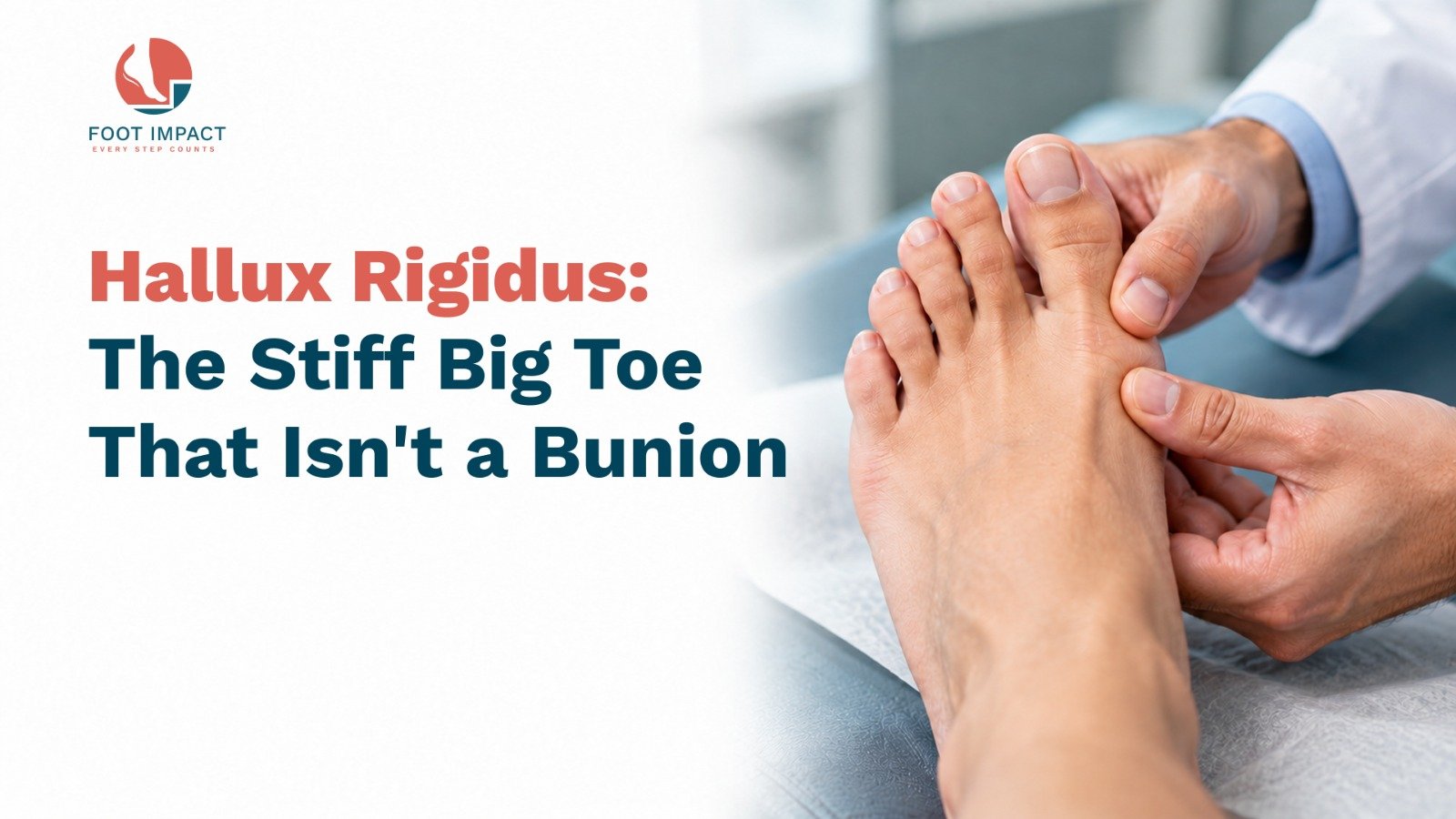
Hallux Rigidus: Why Your Big Toe Is Stiff and Painful (and Why It's Not a Bunion)
Maybe it started as a dull ache at the base of your big toe after a long day. Then you noticed the stiffness first thing in the morning. Now every step that pushes off the ground, climbing the stairs at the station, crossing a foot overbridge, even squatting down, makes the toe protest.
Many people assume this is a bunion and shrug it off, or search for bunion advice that doesn't seem to fit. In a lot of cases, it isn't a bunion at all. It's a different condition called hallux rigidus, and the difference matters because the best way to manage it is not the same.
This guide explains what hallux rigidus is, how to tell it apart from a bunion, what causes it, and what you can do about it without rushing into surgery.
What is hallux rigidus?
Hallux is the medical word for the big toe, and rigidus means rigid. Hallux rigidus is arthritis of the main joint at the base of the big toe, where the toe meets the foot. Over time, the smooth cartilage in that joint wears down, the joint becomes stiff, and the toe loses its ability to bend upward.
That upward bend matters more than people realise. Every time you take a step, your big toe has to bend as your heel lifts and you push off. When the joint is stiff and painful, walking becomes a little uncomfortable, and everyday movements that rely on that bend, such as walking uphill, climbing stairs, running or squatting, can become difficult.
Hallux rigidus vs bunion: how to tell the difference
The two conditions affect the same toe and are often confused, but they are different problems.
It is also possible to have both at once. If you want to learn more about the bunion side of things, read our guides on bunion pain treatment and what a bunion actually is.
Symptoms to look out for
Pain and stiffness in the big toe joint, especially when you start moving or push off while walking
Difficulty bending the big toe upward, or a toe that feels stuck
A hard, bony bump on top of the joint, which can rub against shoes
Swelling or inflammation around the joint, sometimes worse after long periods on your feet
Pain that eases with rest but returns when you walk, climb stairs or squat
In later stages, pain even at rest, or at night
Changing how you walk, such as rolling your foot outward to avoid bending the toe, which can then cause pain in the outer foot, the knee or the hip
What causes hallux rigidus?
There is rarely a single cause. The most common contributors are:
Foot structure. A long or elevated first metatarsal bone, flat feet or excessive rolling in of the foot can put extra stress on the joint with every step.
Previous injury. A stubbed toe, a jammed toe or a sports injury can damage the cartilage and lead to arthritis years later.
Repetitive stress. Jobs and activities that involve a lot of squatting, kneeling or being on your feet put repeated load through the joint.
Family history. Joint problems often run in families.
Other joint disease. Inflammatory conditions such as rheumatoid arthritis or gout can affect the big toe joint. Our guide on foot and ankle arthritis covers when joint pain needs a closer look.
It most often shows up in adulthood, but it can start earlier in people who have had an injury or have a structural problem in the foot.
Is it hallux rigidus or something else?
Pain in the big toe area has several possible causes, and it is worth getting the right diagnosis before you try treatments at home. Other conditions that can look similar include:
Sesamoiditis, which causes pain under the ball of the big toe. See our article on sesamoiditis.
Gout, which usually comes on suddenly with intense pain, redness and swelling.
A bunion or other forefoot problem. Our overview of common foot pain causes can help you narrow things down, but a proper examination is the only way to be sure.
How a podiatrist diagnoses it
Diagnosis usually involves:
A history of your symptoms, including when the pain started, what makes it worse and any past injuries.
A physical examination, checking how far the big toe bends, where it hurts, and whether there is a bony bump or swelling.
A look at how you walk and stand. The way your foot loads and rolls affects the joint, which is why we pay attention to gait and posture.
Imaging when needed. A weight-bearing X-ray can show how much of the joint space has narrowed and whether bony spurs have formed.
Non-surgical treatment options
The good news is that many people can manage hallux rigidus well without surgery, especially when it is caught early. Treatment depends on how advanced the joint is and how much it affects your daily life.
Footwear changes. This is often the single biggest change. Shoes with a stiff, slightly curved sole reduce how much the big toe has to bend with each step, and a roomy toe box stops the bony bump from rubbing. High heels and narrow, pointed shoes make symptoms worse. Our shoe buying guide lists what to look for.
Orthotics. Custom or well-chosen insoles can limit painful movement at the joint, support the arch and reduce stress on the big toe. If flat feet or overpronation are a factor, correcting them can take pressure off the joint as well. You can read more about our flat feet treatment.
Activity changes. You don't need to stop moving. Low-impact activities such as cycling or swimming are usually easier on the joint than running or repeated squatting. If you work on your feet all day, regular breaks and supportive footwear help.
Pain and inflammation management. Ice after a long day, and anti-inflammatory medication when your doctor advises it, can ease flare-ups. In some cases a doctor may suggest an injection into the joint for short-term relief.
Gentle mobility work. In early stages, guided stretching and joint mobility exercises can help maintain some movement. These should be taught by a professional, as forcing a painful joint can make it worse.
When is surgery considered?
Surgery is generally reserved for advanced cases where the joint is severely damaged and conservative treatment has not given enough relief. The options range from removing bony spurs to fusing or replacing the joint, and the right choice depends on the individual. A podiatrist can tell you whether you are likely to need surgical input or whether non-surgical care is worth trying first.
Why early attention matters
Hallux rigidus tends to progress slowly, which is why it is easy to ignore. But the joint doesn't repair itself, and the longer you walk in a way that avoids the painful bend, the more strain you put on your knees, hips and the outer edge of your foot. Early advice on footwear and support can slow things down and keep you moving comfortably for longer.
When to see a podiatrist
Book an appointment if:
Your big toe has been stiff or painful for more than a couple of weeks
You notice a bump on top of the toe joint, or the toe is losing movement
Pain stops you from walking, climbing stairs or squatting normally
You are changing the way you walk to avoid the pain
You have swelling, redness and sudden severe pain in the big toe, which may point to gout or another cause that needs prompt attention
How Foot Impact can help
At Foot Impact, our podiatrists look at why your toe joint is under strain, not only where it hurts. That includes examining how you stand and walk, reviewing your footwear, and planning non-surgical care that may include supportive insoles or orthotics and advice on the right shoes and activity. You can read about how we approach forefoot pain, or book a consultation with us in Mumbai to find out what is behind your stiff big toe.
A stiff big toe is easy to put up with for years. It doesn't have to be something you simply live with.