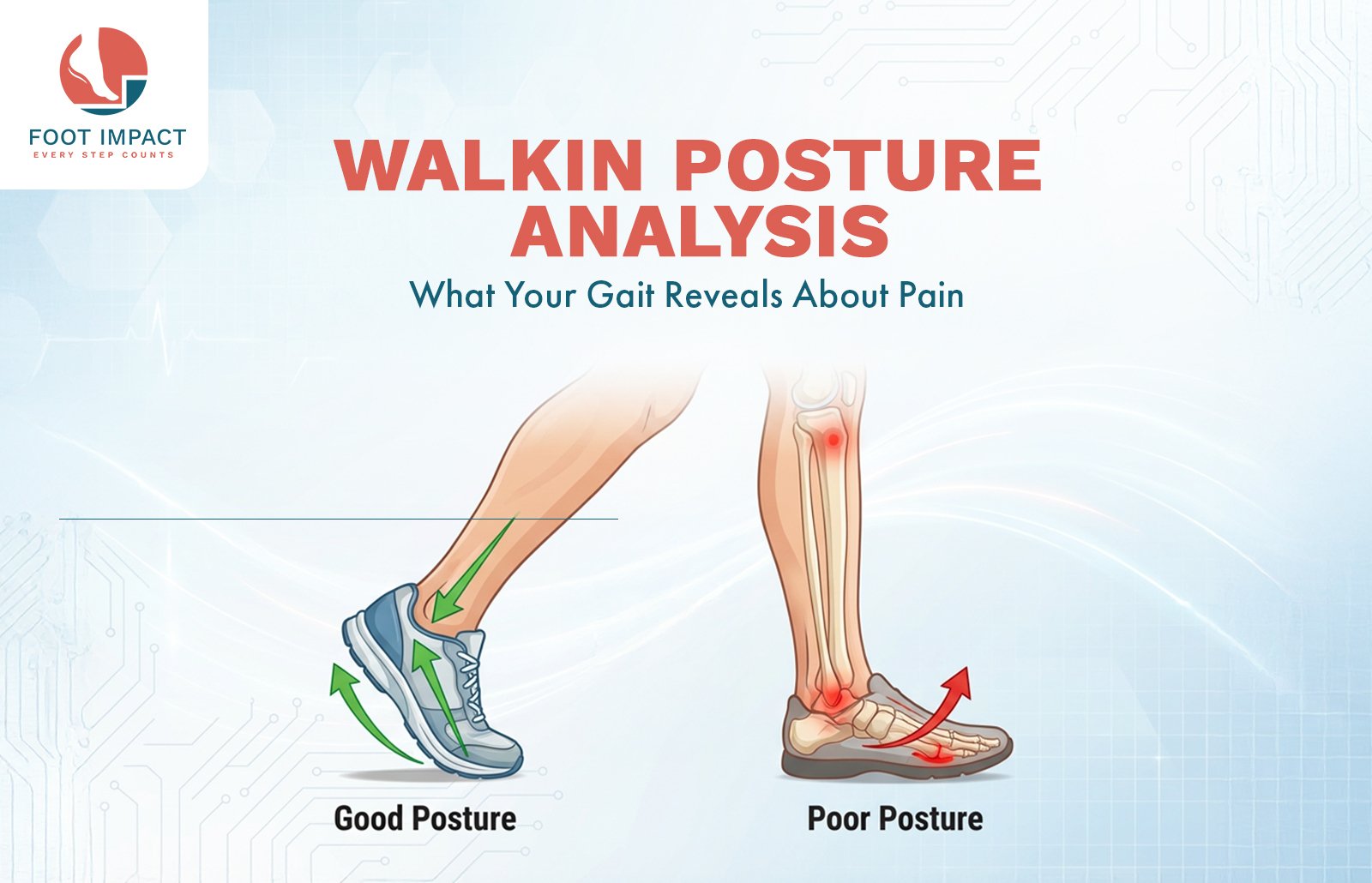
Walking Posture Analysis: What Your Gait Reveals About Pain
Have you ever wondered why you experience persistent pain in your knees, hips, or lower back despite trying various treatments? The answer might be hidden in something you do thousands of times every day—walking. Walking posture analysis, also known as gait analysis, is a diagnostic technique that examines how you walk to identify underlying musculoskeletal problems that cause pain and discomfort.
Every step you take tells a story about your body's alignment, strength, and potential vulnerabilities. From the way your foot strikes the ground to how your hips rotate, these subtle movements can reveal imbalances that lead to chronic pain. Professional walking posture analysis helps healthcare providers, particularly podiatrists and physiotherapists, understand the root causes of your discomfort rather than just treating symptoms.
In this comprehensive guide, we'll explore how gait analysis works, what walking patterns indicate about your health, and how this diagnostic approach can transform your journey toward pain-free movement.
Understanding Walking Posture Analysis
What Is Gait Analysis?
Walking posture analysis is a systematic evaluation of how a person walks or runs. Medical professionals use this assessment to identify abnormalities in your walking pattern that may contribute to pain, injury, or reduced mobility. The analysis examines multiple components including foot placement, stride length, hip rotation, arm swing, and overall body alignment during movement.
According to the National Institute of Arthritis and Musculoskeletal and Skin Diseases, abnormal gait patterns are linked to numerous conditions affecting the feet, legs, hips, and spine. Professional gait analysis can detect these issues before they develop into serious complications.
The Science Behind Your Walking Pattern
Your gait is controlled by a complex interaction between your nervous system, muscles, bones, and joints. The American Academy of Orthopaedic Surgeons explains that the normal walking cycle consists of two main phases: the stance phase (when your foot contacts the ground) and the swing phase (when your foot moves forward through the air).
During each step, your body naturally redistributes weight and adjusts balance. However, injuries, structural abnormalities, muscle weakness, or even poorly fitted shoes can alter this natural pattern, creating compensatory movements that strain other parts of your body.
Common Walking Patterns and What They Reveal
Overpronation and Underpronation
Overpronation occurs when your foot rolls excessively inward during walking. This pattern places extra stress on your ankles, knees, and hips, potentially leading to plantar fasciitis, shin splints, and knee pain. Walking posture analysis can identify this issue by examining foot strike patterns and ankle movement.
Conversely, underpronation (also called supination) happens when your foot doesn't roll inward enough, causing your weight to remain on the outer edge of your foot. This pattern reduces shock absorption and increases the risk of stress fractures and ankle sprains.
Limping and Asymmetric Gait
An asymmetric walking pattern, where one side of your body moves differently than the other, often indicates an underlying problem. This might stem from:
Previous injuries that never fully healed
Leg length discrepancies
Muscle weakness on one side
Joint arthritis or deterioration
Neurological conditions
Professional walking posture analysis measures these asymmetries precisely, helping clinicians develop targeted treatment plans.
Shortened Stride and Shuffling
A shortened stride length or shuffling gait pattern can signal several issues. In older adults, this pattern might indicate balance concerns or fear of falling. According to research published by the Centers for Disease Control and Prevention, gait disturbances significantly increase fall risk in elderly populations.
Shuffling can also indicate:
Parkinson's disease in early stages
Hip or knee arthritis
Lower back problems
General muscle weakness
Foot pain or discomfort
How Professional Gait Analysis Is Performed
Visual Assessment
The walking posture analysis begins with your healthcare provider observing how you walk naturally. They watch you from multiple angles—front, back, and sides—noting any obvious irregularities in your movement. This observational phase helps identify major deviations from normal gait patterns.
At specialized clinics like Foot Impact, podiatrists use systematic visual assessment protocols that examine specific checkpoints during your walking cycle. They look at heel strike, foot rollover, toe-off, hip movement, and upper body positioning.
Video Gait Analysis
Modern walking posture analysis often incorporates video recording technology. High-speed cameras capture your movement from multiple angles, allowing healthcare providers to review your gait frame-by-frame. This detailed analysis reveals subtle abnormalities that might be missed during real-time observation.
Video analysis is particularly valuable because it:
Provides objective, reviewable data
Allows comparison before and after treatment
Helps educate patients about their walking patterns
Documents progress over time
Pressure Mapping and Force Plates
Advanced gait laboratories use pressure-sensitive platforms that measure the force and pressure distribution across your feet while walking. These force plates create visual maps showing exactly where and how much pressure your feet generate during each step.
According to the National Institutes of Health, pressure mapping technology helps identify areas of excessive stress that may lead to ulcers (particularly in diabetic patients), calluses, or structural foot problems.
3D Motion Capture Analysis
The most sophisticated walking posture analysis uses three-dimensional motion capture technology similar to what's used in movie special effects. Reflective markers are placed on specific body points, and multiple cameras track these markers as you walk, creating a complete 3D model of your movement.
This comprehensive approach measures:
Joint angles throughout the gait cycle
Rotational forces at hips, knees, and ankles
Center of mass movement
Muscle activation patterns
Biomechanical efficiency
What Your Walking Pattern Reveals About Pain
Foot and Ankle Pain
When walking posture analysis reveals abnormal foot mechanics, it often explains chronic foot pain. Common findings include:
Plantar Fasciitis Indicators: Excessive pronation or supination can strain the plantar fascia (the thick band of tissue running across the bottom of your foot), causing heel pain, especially during the first steps in the morning.
Achilles Tendinitis Patterns: Overpronation forces your Achilles tendon to work harder, potentially causing inflammation and pain along the back of your heel and lower calf.
Metatarsalgia Signs: Abnormal pressure distribution during push-off can create pain in the ball of your foot. Pressure mapping during gait analysis pinpoints these problematic areas.
Understanding these patterns through professional foot pain assessment services allows for precise treatment targeting the actual cause rather than just the symptoms.
Knee Pain and Gait Abnormalities
The Arthritis Foundation notes that walking patterns significantly influence knee health. Walking posture analysis frequently reveals connections between gait and knee pain:
Patellofemoral Pain Syndrome: Often called "runner's knee," this condition relates to how your kneecap tracks during movement. Gait analysis shows rotation patterns that pull the kneecap out of alignment.
IT Band Syndrome: The iliotibial band runs along the outside of your thigh from hip to knee. Certain gait patterns, particularly overpronation or hip drop, create friction that inflames this band, causing lateral knee pain.
Osteoarthritis Progression: Abnormal loading patterns accelerate cartilage wear. Walking posture analysis identifies these patterns early, allowing interventions that slow arthritis progression.
Hip and Lower Back Pain
Your walking pattern significantly impacts your hips and lower back. During gait analysis, practitioners observe:
Pelvic Tilt and Rotation: Excessive or insufficient pelvic movement during walking often correlates with lower back pain. Your pelvis should rotate smoothly as you walk; restricted or exaggerated movement creates compensatory stress.
Hip Drop: When one hip drops significantly during the stance phase (when your opposite foot lifts), it indicates weakness in your hip abductor muscles. This pattern commonly causes both hip and lower back discomfort.
Leg Length Discrepancy: Even small differences in leg length (sometimes as little as a quarter inch) alter your gait and can cause chronic back pain. Precise gait analysis measurement identifies these discrepancies that might be missed in standard examinations.
Upper Body Alignment Issues
While we focus primarily on lower body mechanics, walking posture analysis also examines upper body movement. Your arm swing, shoulder position, and head alignment all influence overall biomechanics.
Reduced or asymmetric arm swing might indicate:
Shoulder injuries affecting natural movement
Neurological conditions like Parkinson's disease
Compensatory patterns from lower body problems
General muscular tightness or weakness
Who Benefits From Walking Posture Analysis
Athletes and Active Individuals
Athletes frequently use gait analysis to optimize performance and prevent injuries. Runners, in particular, benefit from understanding their biomechanics. Professional walking posture analysis helps identify inefficient movement patterns that waste energy and increase injury risk.
By analyzing running gait, sports medicine professionals can recommend:
Appropriate footwear for your specific foot strike pattern
Strength training exercises targeting weak areas
Form corrections that improve efficiency
Injury prevention strategies based on your unique biomechanics
People With Chronic Pain
If you've experienced persistent foot, knee, hip, or back pain without clear cause, walking posture analysis often provides breakthrough insights. Many chronic pain sufferers have tried multiple treatments without success because the underlying biomechanical cause was never identified.
Gait analysis reveals the mechanical root of your pain, enabling treatment approaches such as:
Custom orthotics designed for your specific gait pattern
Targeted physical therapy addressing weak or tight areas
Footwear modifications that support proper alignment
Surgical evaluation when conservative treatments prove insufficient
Diabetic Patients
The American Diabetes Association emphasizes the importance of foot care for people with diabetes. Walking posture analysis, particularly with pressure mapping, identifies high-pressure areas where diabetic ulcers commonly develop.
Early detection of abnormal pressure patterns allows preventive interventions including specialized footwear, custom insoles, and patient education about proper foot care.
Elderly Individuals
As we age, gait naturally changes due to muscle loss, joint degeneration, and reduced flexibility. However, some changes indicate fall risk or developing conditions. Walking posture analysis for elderly patients helps:
Assess fall risk and implement prevention strategies
Detect early neurological changes
Guide assistive device recommendations (canes, walkers)
Monitor disease progression in conditions like Parkinson's
Maintain independence and mobility longer
Children With Developmental Concerns
Parents often notice their children walking differently than peers. While many childhood gait variations resolve naturally with growth, professional walking posture analysis determines whether intervention is needed.
Pediatric gait assessment identifies:
In-toeing or out-toeing that requires treatment
Toe-walking patterns that might indicate underlying conditions
Leg length discrepancies affecting development
Flat feet requiring orthotic support
Muscular or neurological developmental delays
Treatment Options Based on Gait Analysis Results
Custom Orthotics and Shoe Modifications
Once walking posture analysis identifies your specific biomechanical issues, custom orthotic devices can be created to address them. Unlike over-the-counter insoles, custom orthotics are designed specifically for your foot structure and gait pattern.
Custom orthotics can:
Redistribute pressure away from painful areas
Control excessive pronation or supination
Improve overall alignment from feet up through spine
Reduce shock impact on joints
Enhance athletic performance
Professional podiatry clinics create these devices using precise measurements and molds of your feet combined with your gait analysis data.
Physical Therapy and Strengthening Programs
Walking posture analysis frequently reveals muscle imbalances—some muscles are too weak while others are overworking to compensate. Physical therapists use gait analysis results to design targeted exercise programs.
These programs typically focus on:
Strengthening weak hip abductors to prevent hip drop
Stretching tight calf muscles that affect ankle mobility
Core strengthening for better pelvic stability
Balance training to improve overall gait confidence
Functional exercises that retrain proper movement patterns
Gait Retraining Techniques
Sometimes the solution isn't adding external devices but rather changing how you move. Gait retraining uses video feedback, verbal cues, and practice to help you adopt healthier walking patterns.
This approach is particularly effective for:
Runners looking to reduce injury risk
Post-surgical patients relearning proper movement
People with habitual compensatory patterns
Individuals transitioning to minimalist or barefoot-style footwear
Surgical Interventions
When conservative treatments based on walking posture analysis don't provide adequate relief, the detailed biomechanical information guides surgical decision-making. Surgeons use gait analysis data to:
Determine which structures require correction
Predict surgical outcomes
Plan optimal surgical approaches
Measure post-operative improvements objectively
The Technology Behind Modern Gait Analysis
Wearable Sensors and Smart Technology
Recent advances in technology have made walking posture analysis more accessible. Wearable sensors embedded in shoes or attached to legs can track gait parameters during daily activities, not just in clinical settings.
These devices measure:
Step count and cadence
Foot strike patterns
Balance and stability metrics
Activity-specific gait variations
Long-term movement trends
While not replacing comprehensive clinical analysis, wearable technology provides valuable continuous monitoring data.
Artificial Intelligence in Gait Analysis
Artificial intelligence (AI) is revolutionizing how healthcare providers interpret gait data. Machine learning algorithms can analyze thousands of gait patterns to identify subtle abnormalities that human observers might miss.
AI applications in walking posture analysis include:
Automatic detection of disease-specific gait signatures
Predictive modeling for injury risk
Personalized treatment recommendations
Early detection of neurological deterioration
Population-level gait pattern research
Preparing for Your Gait Analysis Appointment
What to Bring and Wear
To get the most from your walking posture analysis appointment:
Wear comfortable, form-fitting clothing that allows observation of leg and hip movement
Bring the shoes you wear most frequently (athletic shoes, work shoes, casual shoes)
If you have previous medical imaging or reports, bring them for reference
Come prepared to walk naturally—avoid changing your gait to "help" the assessment
List all current pain points and symptoms you're experiencing
Questions to Ask Your Healthcare Provider
Make your gait analysis appointment productive by asking:
What specific abnormalities did you identify in my walking pattern?
How do these patterns relate to my pain symptoms?
What treatment options do you recommend based on my gait analysis?
How long before I should expect improvement?
Will I need follow-up gait analysis to monitor progress?
Are there exercises or stretches I should do at home?
Should I modify my current activity level?
Frequently Asked Questions
Q: How long does a walking posture analysis appointment take?
A: A comprehensive gait analysis typically takes 45-90 minutes, including the initial interview, multiple walking trials from different angles, video review, and discussion of findings and treatment recommendations.
Q: Is gait analysis covered by insurance?
A: Coverage varies by insurance provider and the medical necessity of the analysis. When gait analysis is ordered to diagnose or treat a specific medical condition causing pain or functional limitation, many insurance plans provide coverage. Check with your insurance provider and healthcare clinic beforehand.
Q: Can walking posture analysis prevent future injuries?
A: Yes, identifying biomechanical vulnerabilities before they cause symptoms allows preventive interventions. Athletes particularly benefit from proactive gait analysis to optimize performance and reduce injury risk.
Q: How accurate is visual gait analysis compared to computerized analysis?
A: Experienced clinicians can identify major gait abnormalities through visual observation alone. However, computerized analysis with video, pressure mapping, or 3D motion capture provides more precise, objective measurements that detect subtle issues and document progress quantitatively.
Q: At what age should children have gait analysis if I notice walking abnormalities?
A: If you notice persistent toe-walking beyond age 3, significant limping, frequent tripping, or complaints of leg pain, consult a pediatric specialist. Many childhood gait variations are normal developmental phases, but professional evaluation provides peace of mind and identifies issues requiring early intervention.
Q: Can gait analysis help with balance problems?
A: Absolutely. Walking posture analysis includes assessment of balance and stability during movement. The results help identify fall risks and guide balance training interventions, particularly important for elderly individuals or those with neurological conditions.
Conclusion
Walking posture analysis provides remarkable insights into your body's mechanics and the root causes of persistent pain. Whether you're an athlete seeking performance optimization, someone suffering from chronic discomfort, or simply want to understand your body better, gait analysis offers valuable diagnostic information that guides effective treatment.
Your walking pattern tells a story about muscle strength, joint alignment, previous injuries, and potential future problems. By examining how you move, healthcare professionals can develop personalized treatment strategies that address the underlying biomechanical issues rather than just managing symptoms.
If you experience recurring foot, knee, hip, or back pain, consider scheduling a professional walking posture analysis. The investment in understanding your unique movement patterns can transform your journey toward pain-free, efficient movement and improved quality of life. Advanced podiatry clinics offering comprehensive gait analysis services provide the expertise and technology needed to decode what your gait reveals about your health.
Remember, every step you take is an opportunity for either healing or harm—professional gait analysis ensures you're moving in the right direction.