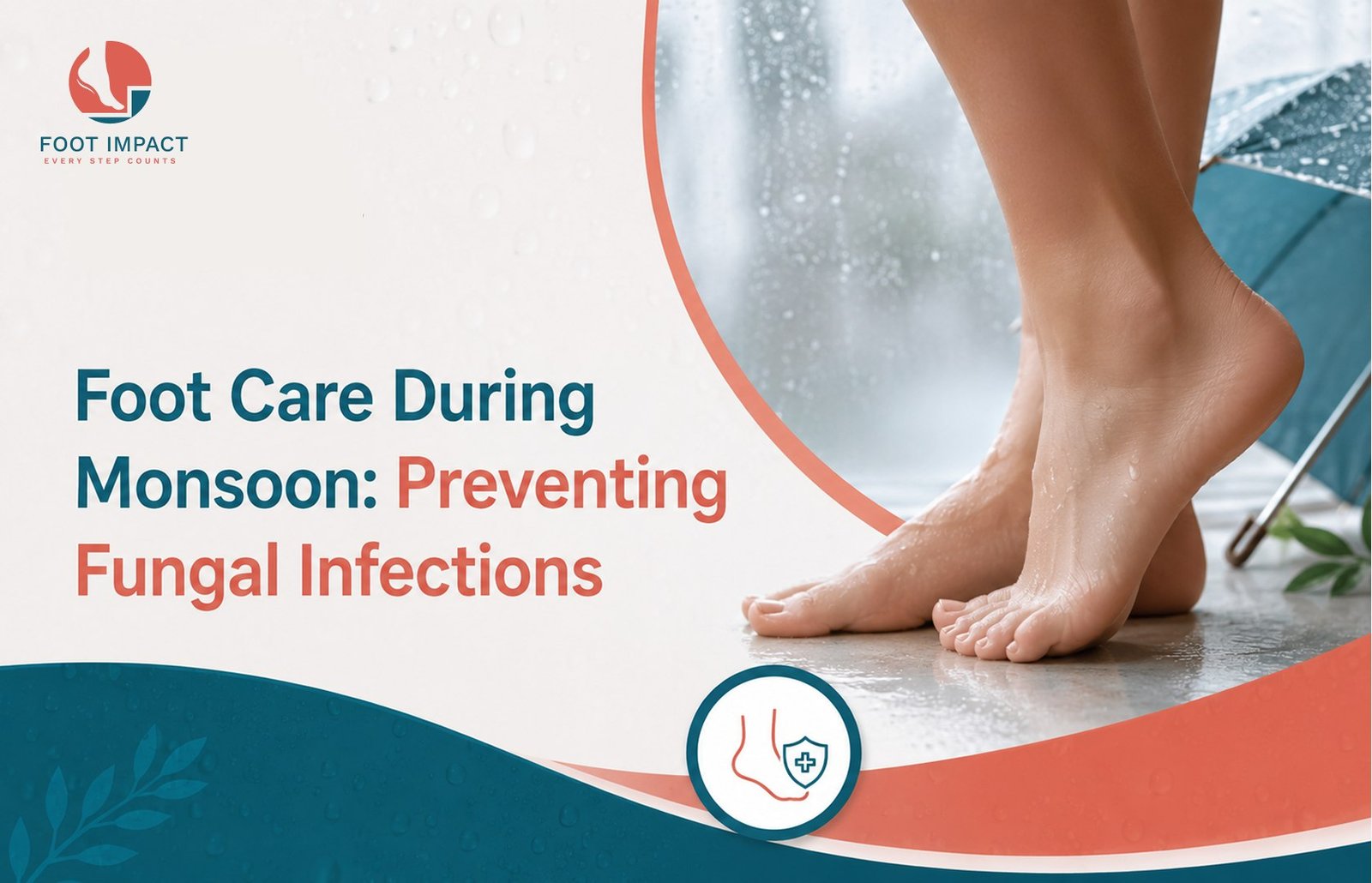
Foot Care During Monsoon: Preventing Fungal Infections & Foot Problems
Mumbai's monsoon brings relief from the heat — but for your feet, it's one of the toughest seasons of the year. Constant dampness, waterlogged streets, and hours spent in wet shoes create the perfect environment for fungal infections and other foot problems to take hold. A little seasonal care goes a long way toward keeping your feet healthy until the rains pass.
Why Monsoon Is Hard on Your Feet
Fungi thrive in warm, moist, dark environments — which is exactly what happens inside a wet shoe on a humid Mumbai afternoon. When feet stay damp for extended periods, the skin's natural barrier weakens, making it far easier for fungal and bacterial infections to develop. Add in the contaminated water that often collects on monsoon streets, and the risk multiplies further.
This is why podiatrists typically see a sharp rise in fungal infections, skin irritation, and related foot complaints every monsoon season.
Common Monsoon Foot Problems
Fungal nail infections. Persistent moisture around the toenails creates ideal conditions for fungus to take hold, often causing nails to become discolored, thickened, or brittle.
Athlete's foot (fungal skin infection). Damp socks and shoes are a common trigger for itching, peeling, and cracking skin, particularly between the toes.
Bacterial infections. Walking through contaminated rainwater increases exposure to bacteria, which can lead to infection through even small cuts or abrasions.
Skin maceration and cracking. Prolonged dampness softens and weakens the skin, making it more prone to cracking — especially around the heels — which can then become an entry point for infection.
Fungal or bacterial infections in existing wounds. For anyone managing diabetic foot concerns, monsoon dampness raises the risk of a minor wound becoming a more serious infection, making seasonal vigilance especially important.
How to Protect Your Feet This Monsoon
1. Keep Feet Dry — Consistently
This is the single most effective monsoon habit. Dry your feet thoroughly, including between the toes, every time they get wet. Carrying a small towel or wipes for this purpose during commutes is a simple but effective habit.
2. Choose the Right Footwear
Avoid closed shoes that trap moisture during the monsoon — waterproof or quick-drying sandals and shoes are a better choice for daily wear. If you do wear closed shoes, avoid wearing the same pair two days in a row, giving them time to fully dry out between uses.
3. Change Wet Socks Immediately
Wet socks left on for hours are one of the biggest contributors to fungal infections. Change into dry socks as soon as possible after getting wet, and choose moisture-wicking fabrics over cotton where possible.
4. Avoid Walking Barefoot in Public Wet Areas
Public spaces with standing water increase exposure to bacteria and fungus. Wearing appropriate footwear even indoors during humid weather helps reduce this risk.
5. Apply Antifungal Powder or Cream Preventively
For anyone prone to fungal infections, using an antifungal powder in shoes and socks, or an antifungal cream on the feet, can help prevent infection before it starts — particularly useful for those with a history of athlete's foot.
6. Moisturize — But Strategically
While excess moisture from rainwater is a problem, dry, cracked skin (especially on the heels) is equally vulnerable. Moisturize feet after thoroughly drying them, focusing on the heels, and avoid applying moisturizer between the toes where trapped dampness can encourage fungal growth.
7. Trim Nails Regularly and Keep Them Dry
Short, clean, dry nails are less hospitable to fungus than long or damaged nails where moisture and debris can collect underneath.
8. Extra Care for Diabetic Feet
If you have diabetes, monsoon season calls for extra vigilance. Reduced sensation can mean small cuts or blisters go unnoticed, and dampness increases infection risk significantly. Daily foot checks, prompt drying, and immediate attention to any cuts or wounds are essential during this season.
When to See a Podiatrist
Most minor monsoon-related foot issues can be managed with the preventive steps above, but you should see a podiatrist if you notice:
Persistent itching, redness, or peeling that doesn't improve within a few days
Discolored, thickened, or separating toenails
Any wound, especially in someone with diabetes, that shows signs of infection — increased redness, swelling, warmth, or discharge
Cracked heels that are painful or bleeding
Fungal infections in particular tend to worsen without proper treatment, and self-treating with the wrong product can sometimes delay effective care.
At Foot Impact, we see a consistent rise in fungal infections, cracked heels, and related foot concerns every monsoon. If your feet aren't responding to home care, or you want a proactive check before the season sets in, our team in Mumbai can assess and treat the issue early — before it becomes a bigger problem.
Dealing with a monsoon-related foot issue, or want a preventive check-up before the rains peak? Book a consultation with our team.
FAQ
Why do fungal infections increase during monsoon? Fungi thrive in warm, moist environments, and monsoon conditions — wet shoes, humid air, and prolonged dampness — create exactly that environment on and around the feet.
Is it safe to wear closed shoes during monsoon? Closed shoes aren't unsafe, but they trap moisture more than open or quick-drying footwear, so it's important to dry them out fully between uses and avoid wearing the same damp pair repeatedly.
How can I tell if I have a fungal infection versus just dry, irritated skin? Fungal infections often involve persistent itching, peeling, or discoloration that doesn't improve with regular moisturizing, and tend to worsen rather than resolve on their own. If you're unsure, a podiatrist can confirm with a quick examination.
Should people with diabetes take extra precautions during monsoon? Yes — reduced sensation combined with increased moisture and infection risk makes monsoon a higher-risk season for diabetic foot complications, so daily foot checks and prompt care for any wound are especially important.