If one of your toes has started to bend downward at the middle joint, or curls under like a claw, you're dealing with one of the most common — and most commonly ignored — toe deformities. Hammer toe and claw toe rarely show up overnight. They creep in gradually, often dismissed as "just the way my foot is," until shoes stop fitting comfortably and every step reminds you something is wrong.
Unlike bunions, which involve the big toe joint drifting out of alignment, hammer toe and claw toe affect the smaller toes and the way their joints bend. Understanding the difference — and catching the problem early — can mean the difference between a simple splint and a surgical correction.
What Is Hammer Toe?
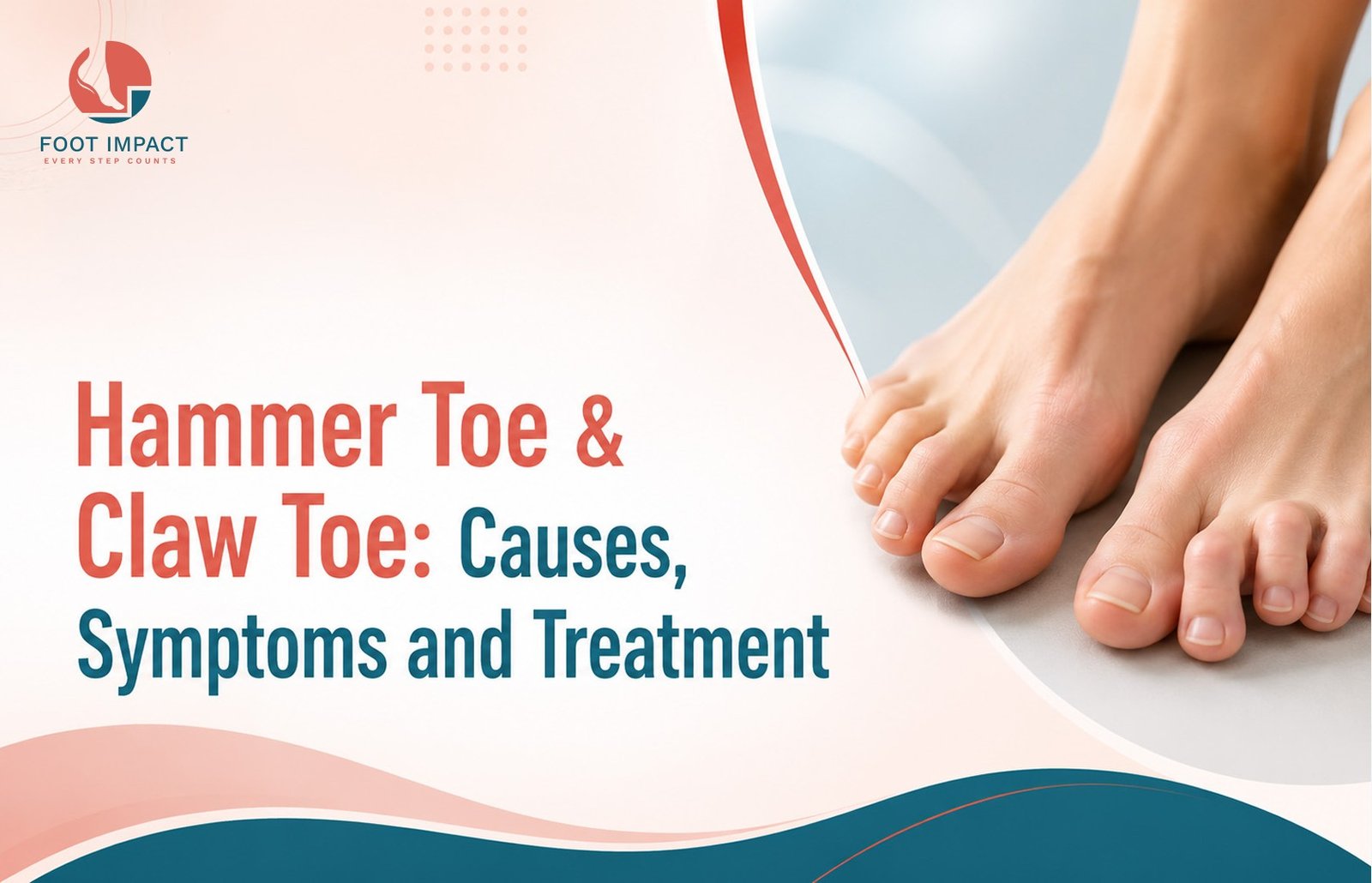
Hammer toe is a structural deformity in which the middle joint of a toe (usually the second, third, or fourth toe) bends downward, giving the toe a hammer-like or upside-down "V" shape. In the early stages, the toe can still be straightened manually. Left untreated, the joint stiffens into that bent position permanently — what podiatrists call a "fixed" deformity, as opposed to the earlier "flexible" stage.
What Is Claw Toe?
Claw toe is a related but distinct deformity. Here, the toe bends upward at the joint where it meets the foot (the metatarsophalangeal joint) while curling downward at both the middle and end joints — creating a claw-like shape that digs into the sole of the shoe. Claw toe often affects multiple toes at once and is more frequently linked to nerve or muscle imbalance conditions than hammer toe is.
A third, related condition — mallet toe — affects only the joint nearest the toe tip. All three fall under the umbrella of "lesser toe deformities," and it's common for a patient to have a combination of them across different toes.
What Causes Hammer Toe and Claw Toe?
These deformities develop when the muscles and tendons that normally hold a toe straight fall out of balance, causing the joint to buckle. Common contributing factors include:
Footwear: Tight, narrow, or pointed-toe shoes — including many formal and high-heeled shoes — force the toes into a bent position for hours at a time. Over years, the tendons adapt to this shortened position.
Muscle imbalance: When the muscles on the top and bottom of the toe don't work in coordination, the joint is pulled out of its natural alignment.
Foot structure: A high-arched foot or a second toe that is longer than the big toe increases the likelihood of a hammer toe.
Trauma: A prior toe injury, such as a fracture, can alter joint mechanics permanently.
Nerve and muscle conditions: Claw toe in particular is associated with conditions like diabetic peripheral neuropathy, Charcot-Marie-Tooth disease, or other conditions that affect nerve signalling to the small muscles of the foot. Patients with long-standing diabetes should be especially watchful for claw toes, as reduced sensation can mask developing pressure sores.
Arthritis: Rheumatoid arthritis and other inflammatory joint conditions can distort the small joints of the toes over time.
Genetics: A family history of toe deformities raises individual risk, independent of footwear habits.
Symptoms to Watch For
The symptoms of hammer toe and claw toe often overlap, and typically develop gradually:
A toe that appears bent or curled, either occasionally (in early, flexible stages) or permanently (in later, rigid stages)
Pain or stiffness when moving the affected toe, especially when wearing closed shoes
A corn or callus on top of the bent joint, where it rubs against the inside of the shoe
A callus on the ball of the foot, from altered weight distribution
Difficulty finding shoes that fit comfortably
Swelling or redness around the affected joint
In advanced cases, an open sore over the joint — particularly concerning in patients with diabetes or reduced foot sensation, as these sores can go unnoticed and become infected
If you notice any open wound on a toe, especially if you have diabetes, this warrants prompt evaluation rather than home care.
How Is It Diagnosed?
Diagnosis usually begins with a physical examination, where the podiatrist checks whether the toe can still be manually straightened (flexible deformity) or is fixed in position (rigid deformity) — this distinction directly guides treatment choice. The doctor will also assess your gait, footwear, and overall foot structure, and may order an X-ray to evaluate the degree of joint involvement and rule out arthritis or other underlying causes.
Non-Surgical Treatment Options
Most flexible hammer toe and claw toe cases respond well to conservative treatment, especially when addressed early:
Footwear changes: Switching to shoes with a wide, deep toe box takes pressure off the bent joint and is often the single most effective first step.
Toe splints and cushioned pads: Silicone or gel toe splints help hold the toe in a straighter position during the day, while padding over corns and calluses reduces friction and discomfort.
Custom orthotics: For patients whose deformity stems from an underlying structural issue, such as a high arch or overpronation, custom orthotic insoles can redistribute pressure away from the affected toe and slow further progression.
Toe exercises and stretching: Simple exercises — picking up marbles with the toes, towel curls, and manual toe stretches — help maintain flexibility in the joint and strengthen the small muscles that stabilise it. These are most effective in the early, flexible stage.
Corn and callus care: Regular, professional trimming of corns and calluses prevents them from becoming painful or infected. Home "corn removal" products containing acid should be avoided, particularly by diabetic patients, as they can cause skin damage.
When Is Surgery Needed?
Surgery is generally considered when the deformity has become rigid, when pain persists despite conservative measures, or when corns, calluses, or sores keep recurring. Depending on the severity and flexibility of the toe, options include:
Tendon transfer or release: Rebalancing the tendons pulling the toe out of position, typically used for flexible deformities.
Joint arthroplasty: Removing a small portion of bone at the affected joint to allow the toe to straighten.
Joint fusion (arthrodesis): Permanently fusing the joint in a straightened position, generally reserved for rigid, more advanced deformities.
Most of these procedures are performed on a day-care basis under local or regional anaesthesia, with a relatively short recovery period involving a surgical shoe for a few weeks. Your podiatrist will recommend the specific approach based on how rigid the toe is and whether nearby toes or joints are also involved.
Can Hammer Toe or Claw Toe Be Prevented?
While genetic and neurological factors aren't within your control, several habits reduce your risk or slow progression:
Choose shoes with a wide toe box and avoid high heels for extended periods
Replace shoes once they no longer offer adequate toe room
Perform toe-strengthening exercises regularly, especially if you notice early stiffness
If you have diabetes, schedule regular podiatric foot checks even without pain, since neuropathy can mask early warning signs
Address any noticeable toe bending early — the earlier a flexible deformity is treated, the less likely it is to become rigid
When to See a Podiatrist
Don't wait for the pain to become unbearable. If a toe has started to bend, if you're developing corns or calluses that keep coming back, or if you have diabetes and notice any change in your toe shape, it's worth getting it evaluated. Early-stage hammer toe and claw toe are often manageable without surgery — but that window narrows the longer the deformity is left untreated.
If you're in Mumbai and dealing with a bent or painful toe, [book a consultation with our podiatry team] to get an accurate diagnosis and a treatment plan suited to your foot structure and lifestyle.