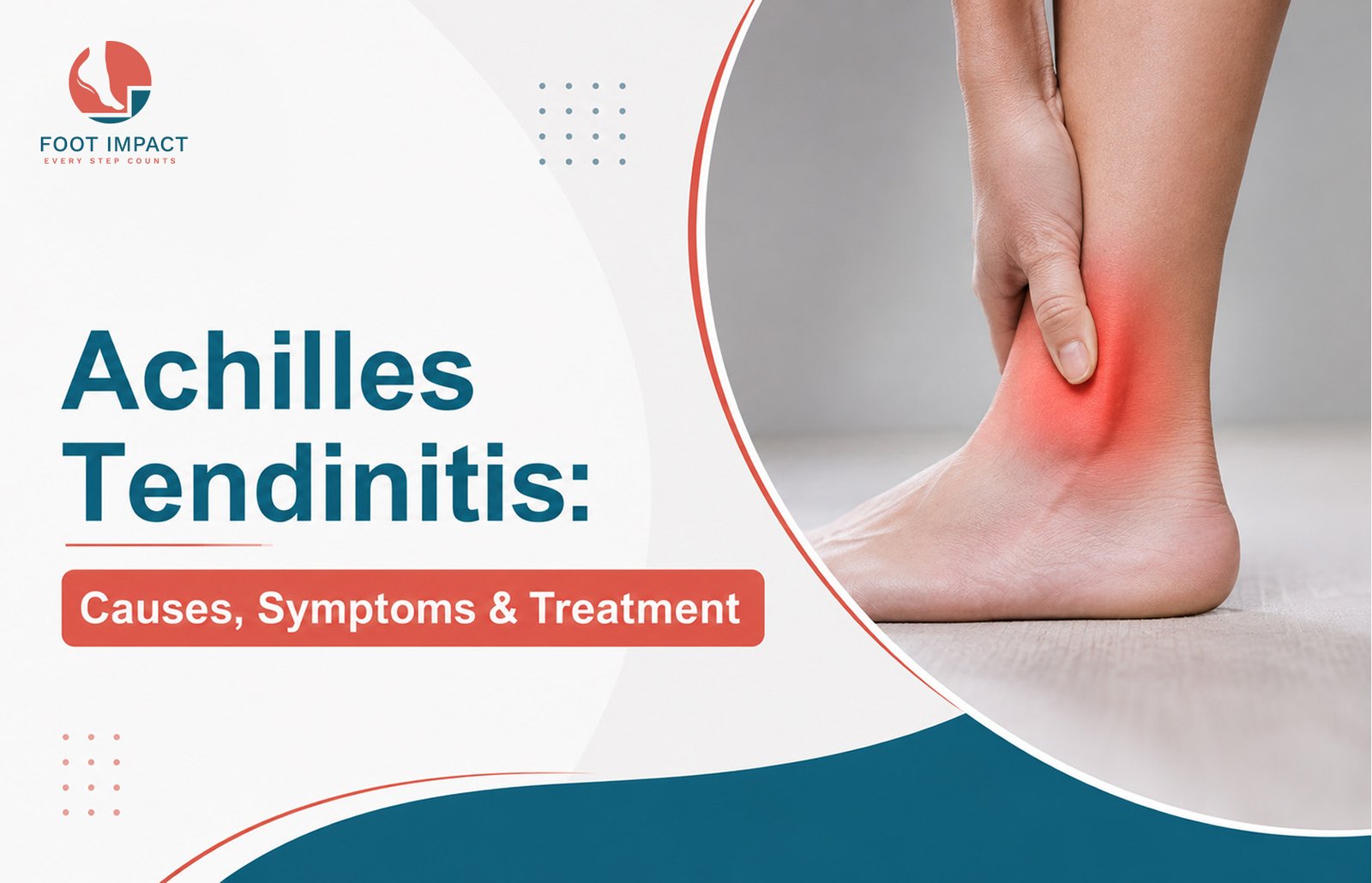
Achilles Tendinitis: Causes, Symptoms & Treatment
If you've felt a dull ache — or a sharp pinch — at the back of your heel when you walk, run, or climb stairs, you may be dealing with Achilles tendinitis. It's one of the most common overuse injuries among runners, gym-goers, and anyone who's recently ramped up their activity level, yet it's frequently ignored until it starts interfering with daily movement.This guide covers what Achilles tendinitis actually is, why it happens, how it's treated, and when heel pain needs more urgent attention. Related: Read our guide on Heel Pain: Causes and Treatment
In This Article
What Is Achilles Tendinitis?
What Causes Achilles Tendinitis?
Insertional vs Non-Insertional Achilles Tendinitis
Self-Care That Helps
Professional Treatment Options
When Achilles Pain is an Emergency: Signs of a Rupture
Prevention for Runners and Active Adults
Frequently Asked Questions
When to See a Podiatrist
What Is Achilles Tendinitis?
The Achilles tendon is the thick band of tissue connecting your calf muscles to your heel bone. It's the tendon that lets you push off the ground when you walk, run, or jump — which also makes it one of the most heavily used, and most overworked, tendons in the body.
Achilles tendinitis is inflammation and irritation of this tendon, usually caused by repetitive strain rather than a single injury. Patients typically describe it as pain or stiffness at the back of the heel that's worse first thing in the morning or after periods of rest, and that tends to ease slightly once the area warms up — only to return after activity or by the end of the day.
The pain can show up right at the point where the tendon meets the heel bone, or a little higher, in the middle of the tendon itself — and where it shows up actually matters for how it's treated.
What Causes Achilles Tendinitis?
Achilles tendinitis rarely comes from one specific event. It's almost always the result of cumulative stress on the tendon, often from a combination of the following:
Overuse. Repetitive stress — from running, jumping sports, or standing for long hours — is the leading cause. The tendon simply doesn't get enough time to recover between sessions.
Sudden increases in activity. A common trigger is doing "too much, too soon" — ramping up running distance, adding hill training, or returning to sport after a break without easing back in.
Tight or weak calf muscles. Tight calves increase tension on the Achilles tendon with every step, while weak calves force the tendon to absorb more load than it should.
Flat feet or poor foot mechanics. Overpronation (feet rolling inward) changes the angle at which the tendon pulls, increasing strain over time.
Footwear. Worn-out shoes, unsupportive soles, or a sudden switch to flatter shoes (including going barefoot more often) can all add stress to the tendon.
Age. Tendons naturally lose some elasticity and blood supply with age, making tendinitis more common in active adults over 40.
Insertional vs Non-Insertional Achilles Tendinitis
Not all Achilles tendinitis is the same, and the distinction matters for treatment.
Insertional Achilles tendinitis affects the lower portion of the tendon, right where it attaches to the heel bone. It's often associated with bone spurs at the attachment point and can be aggravated by shoes that press directly on the back of the heel.
Non-insertional Achilles tendinitis affects the middle portion of the tendon, a few centimetres above the heel. This type is more common in younger, active runners and is typically linked to overuse and repetitive strain rather than bony changes.
Both cause similar day-to-day symptoms, but the treatment approach — particularly with stretching direction and footwear choices — differs depending on which type you have. This is one reason a proper diagnosis matters rather than guessing based on symptoms alone.
Self-Care That Helps
For mild, early-stage Achilles tendinitis, a few consistent changes at home can make a real difference:
Relative rest. This doesn't mean stopping all activity, but reducing the intensity or frequency of whatever aggravates the tendon — often running or jumping — while staying active in lower-impact ways.
Calf stretching. Gentle, consistent stretching of the calf muscles helps reduce tension on the tendon. This should be done carefully and shouldn't cause sharp pain.
Footwear changes. A shoe with a slightly raised heel and good cushioning can reduce strain on the tendon compared to flat or minimalist footwear. Learn more about choosing the right footwear
Ice after activity. Applying ice for 15–20 minutes after activity can help manage inflammation and discomfort.
Self-care works well for mild cases, but symptoms that persist beyond two to three weeks, or that keep coming back, are a sign it's time to see a podiatrist rather than continuing to manage it alone.
Professional Treatment Options
When self-care isn't enough, a podiatrist has several tools to help the tendon heal properly and prevent the problem from becoming chronic:
Physiotherapy. A structured, progressive loading programme — often involving specific eccentric calf exercises — is one of the most well-supported treatments for Achilles tendinitis and helps rebuild the tendon's strength and resilience.
Orthotics. Custom or semi-custom orthotic insoles can correct underlying foot mechanics, such as overpronation, that are placing extra strain on the tendon. Explore our orthotics solutions
Heel lifts. Temporary heel lifts can reduce tension on the tendon while it heals, particularly useful for insertional tendinitis.
Shockwave therapy. Extracorporeal shockwave therapy (ESWT) is often used for tendinitis that hasn't responded to rest and physiotherapy alone, stimulating the tendon's healing response.
Activity modification plans. A podiatrist can help design a realistic return-to-running or return-to-sport plan that avoids re-injury.
Most cases of Achilles tendinitis improve significantly with a combination of these approaches, without needing surgery.
When Achilles Pain is an Emergency: Signs of a Rupture
Achilles tendinitis and an Achilles tendon tear are not the same thing, but ignoring persistent tendinitis increases the risk of the tendon eventually tearing. Seek prompt medical attention if you notice:
A sudden, sharp pain at the back of the heel or calf, sometimes described as feeling like being kicked or hit
An audible pop or snap at the time of injury
Sudden difficulty or inability to push off the affected foot or stand on your toes
Significant swelling and bruising appearing quickly after an injury
These are signs of a possible partial or complete Achilles tendon rupture, which is a different injury requiring urgent assessment — sometimes surgical repair — rather than routine tendinitis treatment.
Prevention for Runners and Active Adults
Since Achilles tendinitis is largely an overuse injury, prevention comes down to managing load and supporting the tendon consistently:
Increase training volume or intensity gradually — a common guideline is no more than a 10% increase in weekly mileage.
Build regular calf stretching and strengthening into your routine, not just when pain shows up.
Replace running shoes regularly, and choose footwear appropriate for your foot type and activity.
Warm up properly before high-intensity activity, especially sprinting or hill work.
Don't ignore early stiffness or discomfort — addressing it early is far easier than treating a chronic case.
Return-to-Running Protocol
Rushing back to full mileage is the number one reason Achilles tendinitis recurs. A podiatrist can help you implement a "walk-jog" progression plan. Generally, you should be pain-free during daily activities before reintroducing running, starting with short intervals (e.g., 1-minute jog, 2-minute walk) and increasing load by no more than 10% per week.
Frequently Asked Questions
Can Achilles tendinitis heal on its own?
Mild cases may improve with rest and self-care, but persistent symptoms lasting more than two to three weeks typically require professional treatment. Ignoring the problem often leads to chronic pain or increased risk of rupture.
Is running with Achilles tendinitis safe?
Running with active Achilles tendinitis is generally not recommended. Continuing to run through pain can worsen the inflammation and delay healing. A podiatrist can help you transition to lower-impact activities while the tendon recovers.
How long does Achilles tendinitis take to heal?
With proper treatment, most cases improve within 6-12 weeks. However, chronic cases or those with underlying mechanical issues may take longer. Consistency with rehabilitation exercises is key to recovery.
What's the difference between Achilles tendinitis and plantar fasciitis?
Achilles tendinitis causes pain at the back of the heel, while plantar fasciitis causes pain under the heel or along the arch of the foot. Both conditions are common and often require different treatment approaches.
Can wearing the wrong shoes cause Achilles tendinitis?
Yes. Shoes with minimal cushioning, worn-out soles, or a sudden switch to very flat footwear can increase strain on the Achilles tendon. Proper footwear with adequate support and a slight heel lift can help reduce tension.
Finding a Podiatrist in Mumbai
If you are in Mumbai and experiencing persistent heel pain, finding a qualified podiatrist is essential. Look for a clinic that offers:
Comprehensive gait analysis
Shockwave therapy for chronic tendinitis
Custom orthotic fittings
Structured rehabilitation programmes
Early intervention is key to avoiding chronic issues and getting back to the activities you enjoy. Many Mumbai clinics now offer same-day appointments for acute heel pain.
When to See a Podiatrist
If heel pain has lasted more than a couple of weeks, keeps returning, or is affecting your ability to walk, run, or exercise comfortably, it's worth getting it properly assessed. Early treatment for Achilles tendinitis is usually straightforward — waiting it out often isn't.
Don't let heel pain keep you from staying active. Schedule a podiatry assessment in Mumbai today and take the first step toward pain-free movement.