Peripheral Artery Disease and Foot Health: What Your Feet Are Trying to Tell You
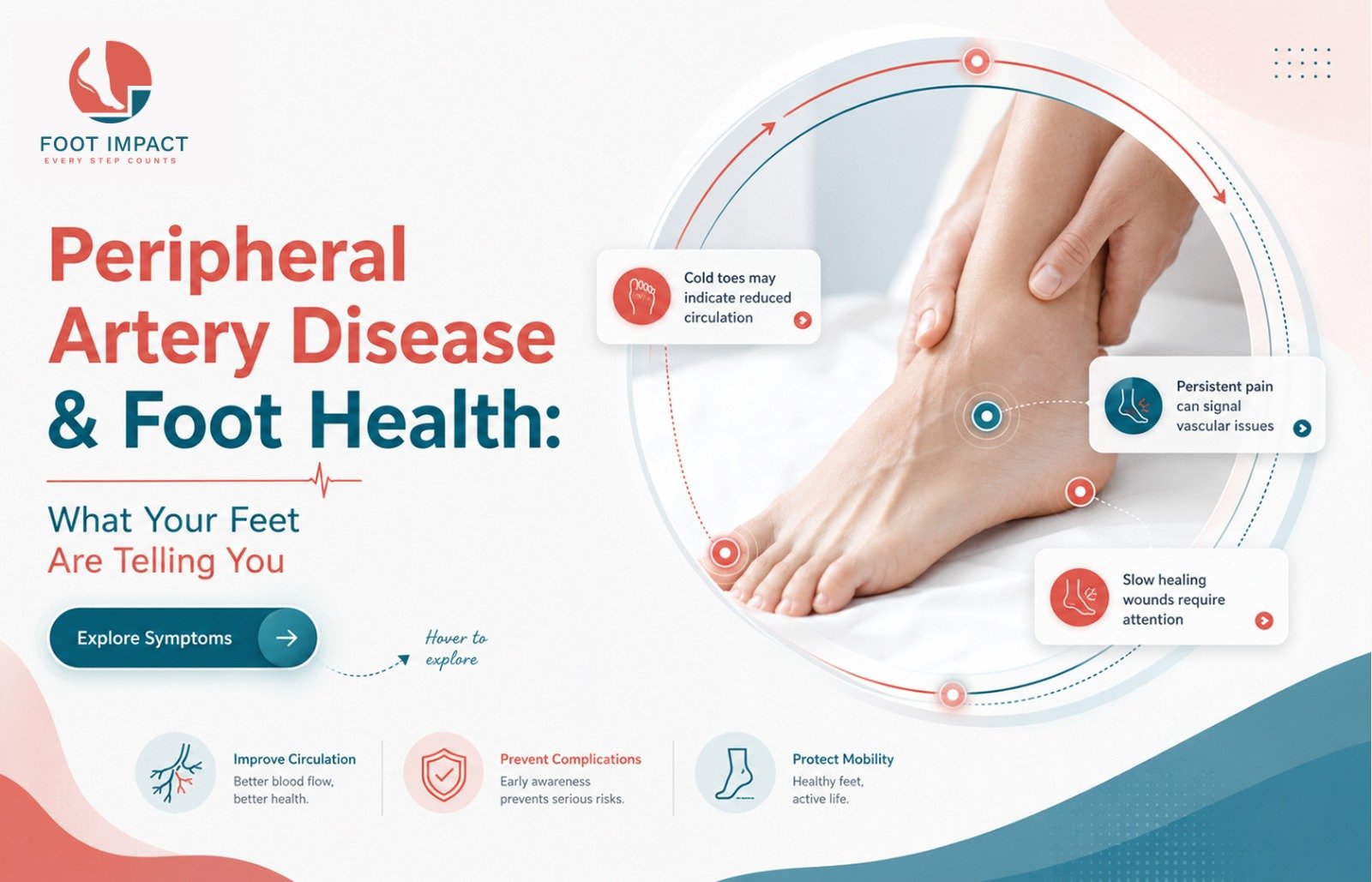
The feet are often the first place the body reveals problems that originate far upstream. A condition developing in the arteries of the abdomen and legs — silently, gradually, over years — announces itself through changes in the feet long before it announces itself anywhere else: coldness where warmth should be, colour that shifts from pink to pale to mottled, a sore that opens and refuses to close, a cramping pain in the calf when walking a distance that previously caused no trouble at all.
Peripheral artery disease — PAD — is precisely this kind of condition. It develops quietly, it is consistently underdiagnosed, and by the time most people become aware of it, significant arterial narrowing has already occurred. In a city like Mumbai, where rates of type 2 diabetes, hypertension, and high cholesterol are among the highest in the country, peripheral artery disease foot symptoms in Mumbai represent a clinical problem that is more common — and more consequential — than most patients realise.
This article explains what PAD is, how it manifests in the feet, why people with diabetes carry a compounded risk, and how podiatric care fits into its detection, management, and prevention of the most serious outcomes.
What Is Peripheral Artery Disease and Why Does It Matter for Feet?
Peripheral artery disease is a circulatory condition in which the arteries supplying blood to the limbs — primarily the legs and feet — become narrowed or blocked by a build-up of fatty deposits (atherosclerosis). As the arterial lumen narrows, blood flow to the extremities is reduced. The tissues at the end of the circulatory chain — the feet — receive progressively less oxygen and fewer nutrients than they require to function and heal normally.
PAD is not a rare condition. The Indian Heart Association estimates that cardiovascular disease, of which PAD is a significant component, accounts for an enormous and growing burden of morbidity across the country. Urban populations with sedentary lifestyles, diets high in refined carbohydrates and fats, and high rates of smoking carry disproportionate risk.
The reason PAD matters specifically for feet is that the feet are the most distal point in the lower limb circulation. They are the last to receive blood and the first to suffer when supply is compromised. A small wound on the foot that would heal in days in a person with normal circulation may take weeks in someone with moderate PAD — and may not heal at all in someone with severe arterial disease. This is not a minor inconvenience. It is a direct pathway to ulceration, infection, and in advanced cases, limb-threatening complications.
Understanding peripheral artery disease foot symptoms in Mumbai — and recognising them early — is one of the most important things a patient can do to protect long-term foot health.
How Poor Circulation Affects Foot Tissue, Healing, and Sensation
To understand why PAD produces the symptoms it does, it helps to think about what adequate arterial blood flow actually delivers. Blood carries oxygen to every tissue it reaches. It delivers glucose and nutrients. It transports immune cells that fight infection. It brings the growth factors that heal damaged tissue. It removes metabolic waste products that accumulate during normal cell function.
When arterial supply is reduced, all of these processes are impaired simultaneously. The effects are cumulative and interconnected:
Tissue oxygenation falls. Skin and subcutaneous tissue that receive insufficient oxygen become fragile, thin, and slow to regenerate. The characteristic shiny, taut, hairless skin seen over the lower leg and foot in advanced PAD is a direct consequence of ischaemic tissue change.
Wound healing is severely compromised. Even a minor cut, blister, or pressure sore that would resolve uneventfully in a healthy individual can become a chronic wound in the context of poor arterial perfusion. Without adequate blood supply to deliver immune cells and growth factors, the normal wound-healing cascade stalls. Infection takes hold more easily, spreads more readily, and responds less reliably to treatment.
Nerve function is affected. Peripheral nerves are metabolically demanding structures. Chronic ischaemia — combined, in diabetic patients, with the separate process of diabetic neuropathy — can produce altered sensation: numbness, tingling, or in some cases a paradoxical burning pain that reflects nerve irritation in the context of inadequate perfusion.
This is the physiological foundation of vascular foot problems in Mumbai — and understanding it clarifies why PAD is treated with such urgency in podiatric and vascular medicine.
Key Symptoms of PAD in the Feet: What to Look For
Peripheral artery disease foot symptoms in Mumbai can be subtle in their early stages, which is a significant part of why the condition is so often diagnosed late. Knowing what to look for — and taking it seriously when you see it — can make a decisive difference.
Coldness and Temperature Asymmetry
One of the earliest and most reliable signs of reduced arterial perfusion is persistent coldness in one or both feet — coldness that is present regardless of ambient temperature, and that may be noticeably asymmetric (one foot colder than the other). This reflects reduced warm arterial blood reaching the foot. Many people dismiss cold feet as a circulation quirk or a consequence of air conditioning; in the presence of cardiovascular risk factors, it warrants proper assessment.
Skin Colour Changes and Foot Discolouration
Foot discolouration causes in the context of PAD are worth understanding in detail, as different colour changes carry different clinical meanings:
Pallor (whitening): Elevation of the leg reduces perfusion in an already-compromised arterial system, producing pallor. The Buerger's test — elevating the leg, then lowering it — demonstrates this colour change clinically.
Dependent rubor (redness on lowering): When a PAD-affected foot is lowered, the pooling of deoxygenated blood in dilated capillaries produces a characteristic dusky red or purple discolouration that disappears with elevation.
Cyanosis: Blue or mottled discolouration indicates significant oxygen depletion in the superficial tissues.
Livedo reticularis: A net-like mottled pattern suggesting both poor arterial inflow and venous involvement.
Any persistent or unexplained change in foot colour is a reason to seek professional assessment.
Intermittent Claudication
A classic symptom of moderate PAD is intermittent claudication — cramping or aching pain in the calf, thigh, or buttock that develops during walking and resolves within minutes of rest. The pain is reproducible: the same distance or effort level reliably triggers it. It reflects the point at which arterial supply can no longer meet the muscles' demand during exertion. As PAD progresses, the distance that triggers claudication shortens.
Rest Pain
When PAD is severe enough that blood flow is insufficient even during rest, patients experience ischaemic rest pain — typically a burning or aching in the foot and toes, often worse at night when cardiac output drops, and partially relieved by hanging the foot off the bed or walking briefly. Rest pain is a signal of critical limb ischaemia and requires urgent vascular assessment.
Slow-Healing Wounds and Ulcers
Perhaps the most clinically significant manifestation of peripheral artery disease foot symptoms in Mumbai is the development of wounds that simply do not heal. Ischaemic ulcers typically occur on the toes, the heel, or the lateral border of the foot — areas subject to pressure or minor trauma. They are characteristically painful, have a pale or necrotic base, and do not bleed readily when disturbed. Their presence indicates severely compromised perfusion and demands immediate clinical attention.
Why Diabetics Face a Compounded and Elevated Risk
In isolation, PAD is serious. In the context of diabetes, the risk profile escalates dramatically — and this is why PAD diabetic foot risk warrants its own careful discussion.
Diabetes contributes to foot complications through two primary mechanisms that interact with PAD in dangerous ways:
Diabetic peripheral neuropathy damages the sensory nerves, reducing or eliminating pain sensation in the feet. A patient with both PAD and neuropathy may develop an ischaemic wound without feeling it. The pain that would normally prompt someone to check their foot, adjust their footwear, or seek help is absent. By the time the wound is noticed — visually, or through smell, or during a routine check — it may already be infected or necrotic.
Microvascular disease — the damage diabetes causes to the small blood vessels — adds a second layer of circulatory compromise on top of the large-vessel disease of PAD. The foot's ability to respond to infection, heal tissue, and maintain skin integrity is impaired at every level of the vascular hierarchy.
The result is the diabetic foot syndrome: a convergence of neuropathy, large-vessel disease, and impaired immunity that makes even trivial foot injuries potentially limb-threatening within days.
According to the International Diabetes Federation (IDF), diabetic foot complications — of which PAD is a central driver — are the leading cause of non-traumatic lower limb amputations worldwide. India carries one of the heaviest burdens of diabetic foot disease globally.
Foot Impact's Diabetic Foot Pain Treatment service is designed specifically for patients at elevated vascular and neuropathic risk — providing the structured, expert monitoring that high-risk feet require.
How Podiatrists Identify Circulation-Related Foot Problems
A podiatric assessment for suspected vascular foot problems in Mumbai is more clinical than most patients expect. It involves systematic evaluation of arterial supply, tissue condition, and nerve function — not just examination of the foot surface.
Vascular Assessment
Ankle-Brachial Pressure Index (ABPI): This is the foundational test for lower limb arterial disease. It compares blood pressure at the ankle to blood pressure at the arm using a handheld Doppler device. A ratio below 0.9 indicates arterial compromise; below 0.5 indicates severe disease. It is a non-invasive, rapid, and highly informative screening tool that forms part of any serious vascular foot assessment.
Pulse palpation: The podiatrist will assess the dorsalis pedis and posterior tibial pulses — the two primary arteries supplying the foot. Absence or significant reduction in either is clinically significant.
Capillary refill time: Pressing the skin and measuring how quickly colour returns after release provides a quick indication of superficial perfusion status.
Wound Assessment
For patients presenting with foot ulceration or wounds, the podiatrist will classify the wound according to a validated framework — assessing depth, the presence of infection, the degree of ischaemia, and any neuropathic component. This guides both immediate treatment decisions and the urgency of vascular surgical referral.
Neurological Testing
Given the frequency with which neuropathy co-exists with PAD in at-risk populations, sensation testing — monofilament pressure testing, vibration perception, and two-point discrimination — is a standard component of any comprehensive assessment for cold feet causes or circulation-related foot pain.
Treatment and Management: How Podiatrists Approach PAD-Related Foot Problems
It is important to be clear about the scope of podiatric management here: the underlying arterial disease in PAD requires medical and, in some cases, vascular surgical management — that is outside the remit of a podiatry clinic. What podiatric care does, and does with considerable clinical impact, is manage the consequences of PAD in the feet, prevent complications, and identify when urgent onward referral is needed.
Offloading and Pressure Redistribution
In the presence of ischaemic ulcers or at-risk skin, offloading — removing pressure from vulnerable areas — is the most immediately impactful intervention. Total contact casting, offloading boots, custom orthotics with pressure redistribution properties, and specialised wound care footwear all have roles depending on the clinical presentation.
For patients without active ulcers but with confirmed PAD, custom orthotics designed to protect bony prominences and distribute pressure away from the most vulnerable zones significantly reduce the risk of wound development.
Wound Care
Podiatric wound care for ischaemic and neuroischaemic wounds requires a different approach from standard wound management. Debridement must be cautious — aggressive debridement of an ischaemic wound removes tissue that the body cannot replace. Moisture-balanced dressings, infection management, and monitoring for deterioration are the core of podiatric wound care in this context.
Footwear Assessment and Modification
Poor circulation foot pain treatment almost always involves a footwear review. Footwear that creates pressure points, restricts circulation through compression, or fails to protect the foot from external trauma directly increases risk. Podiatric footwear advice for PAD patients prioritises depth, width, absence of internal seams, and cushioning — characteristics that may differ significantly from what the patient currently wears.
Urgent Referral
A podiatrist who identifies signs of critical limb ischaemia — rest pain, non-healing wounds with evidence of severe ischaemia, gangrene — will refer urgently to vascular surgery. The window for revascularisation to prevent amputation is time-dependent, and podiatric assessment is often the point in the healthcare pathway where this urgency is first recognised.
Lifestyle Changes That Protect Foot Circulation
While vascular intervention addresses established arterial disease, lifestyle modification has a meaningful preventive and adjunctive role:
Smoking cessation is the single most impactful modifiable risk factor for PAD. Smoking accelerates atherosclerosis, causes arterial vasospasm, and dramatically worsens outcomes in established PAD. The World Health Organization (WHO) identifies tobacco use as a primary driver of cardiovascular disease globally.
Regular walking — paradoxically, the activity that triggers claudication — is recommended by vascular specialists as a supervised therapeutic intervention. Structured walking programmes improve collateral circulation over time and increase claudication distance. The key is to walk to near-maximum tolerable pain, rest, and repeat — not to avoid exertion entirely.
Blood glucose management for diabetic patients directly affects microvascular health. Every reduction in HbA1c reduces the rate of vascular and neurological complications.
Blood pressure and lipid control through diet, exercise, and medication reduces the rate of atherosclerotic progression.
Foot inspection — daily, systematic, every surface of both feet — remains the most immediately actionable protective behaviour for anyone with known or suspected PAD. Early detection of a wound is the difference between a dressing and an amputation.
Frequently Asked Questions About PAD and Foot Health
Q: Are cold feet always a sign of peripheral artery disease?
Cold feet are a common complaint with several possible causes — including Raynaud's phenomenon, anaemia, hypothyroidism, and simple temperature sensitivity. However, persistent cold feet that are present regardless of ambient temperature, are asymmetric, or occur alongside other risk factors such as diabetes, smoking, or hypertension warrant proper vascular assessment. Cold feet in isolation are not diagnostic of PAD, but in the right clinical context, they are a reason to investigate.
Q: Can PAD be reversed with treatment?
The atherosclerotic changes of established PAD cannot be fully reversed, but their progression can be slowed significantly through risk factor modification, and symptoms can be dramatically improved through supervised exercise and, where indicated, vascular procedures (angioplasty, stenting, bypass). The goal of management is to maintain perfusion, protect the feet from injury, and prevent the condition from progressing to critical ischaemia.
Q: How is PAD different from varicose veins?
PAD affects arteries — the vessels carrying oxygenated blood away from the heart to the limbs. Varicose veins affect veins — the vessels returning deoxygenated blood back to the heart. They produce different symptoms: PAD typically causes cold feet, claudication, and ischaemic wounds; varicose veins typically cause aching, heaviness, swelling, and sometimes venous ulcers (which have a different appearance and location to ischaemic ulcers). Both can affect foot and lower limb health, but they require different management pathways.
Q: I have diabetes and my feet are often numb. How do I know if PAD is also involved?
Diabetic neuropathy and PAD frequently co-exist, and the presence of neuropathy (numbness, tingling) does not exclude arterial disease. The distinction matters clinically because management differs. An ankle-brachial pressure index assessment, combined with pulse palpation and clinical examination by a podiatrist experienced in high-risk foot care, can identify the relative contributions of vascular and neuropathic disease. This is a routine part of diabetic foot assessment at Foot Impact.
Q: What is the most important thing a person with PAD can do for their feet?
Inspect them every single day. In the context of reduced blood flow — especially when neuropathy is also present — a minor wound can become a major problem within days. Daily inspection of every surface, including the soles and between the toes (using a mirror if needed), means that any wound is identified at its earliest, most manageable stage. After daily inspection, seeking regular podiatric review — not waiting until something is wrong — is the most protective habit available.
Conclusion: Your Feet Are the Window — Don't Ignore What They're Showing You
Peripheral artery disease foot symptoms in Mumbai present every day in clinics, emergency departments, and, unfortunately, in situations where earlier attention could have prevented what eventually became unavoidable. The feet are the window through which this condition announces itself — and they do so clearly, if you know what you are looking at.
Cold feet, colour changes, a sore that isn't healing, claudication on a familiar walking route — these are not random complaints. They are the circulatory system communicating in the only language available to it: physical signs in the tissue that is furthest from the heart and most dependent on its output.
For patients with diabetes, hypertension, or a history of smoking in Mumbai, proactive podiatric assessment is not a cautious extra — it is a clinical priority. For everyone, understanding that the feet reflect systemic vascular health creates the kind of awareness that enables early intervention and prevents the worst outcomes.
Book a comprehensive foot and vascular assessment at Foot Impact — or begin with an online consultation to discuss your symptoms with an experienced podiatrist before your visit.