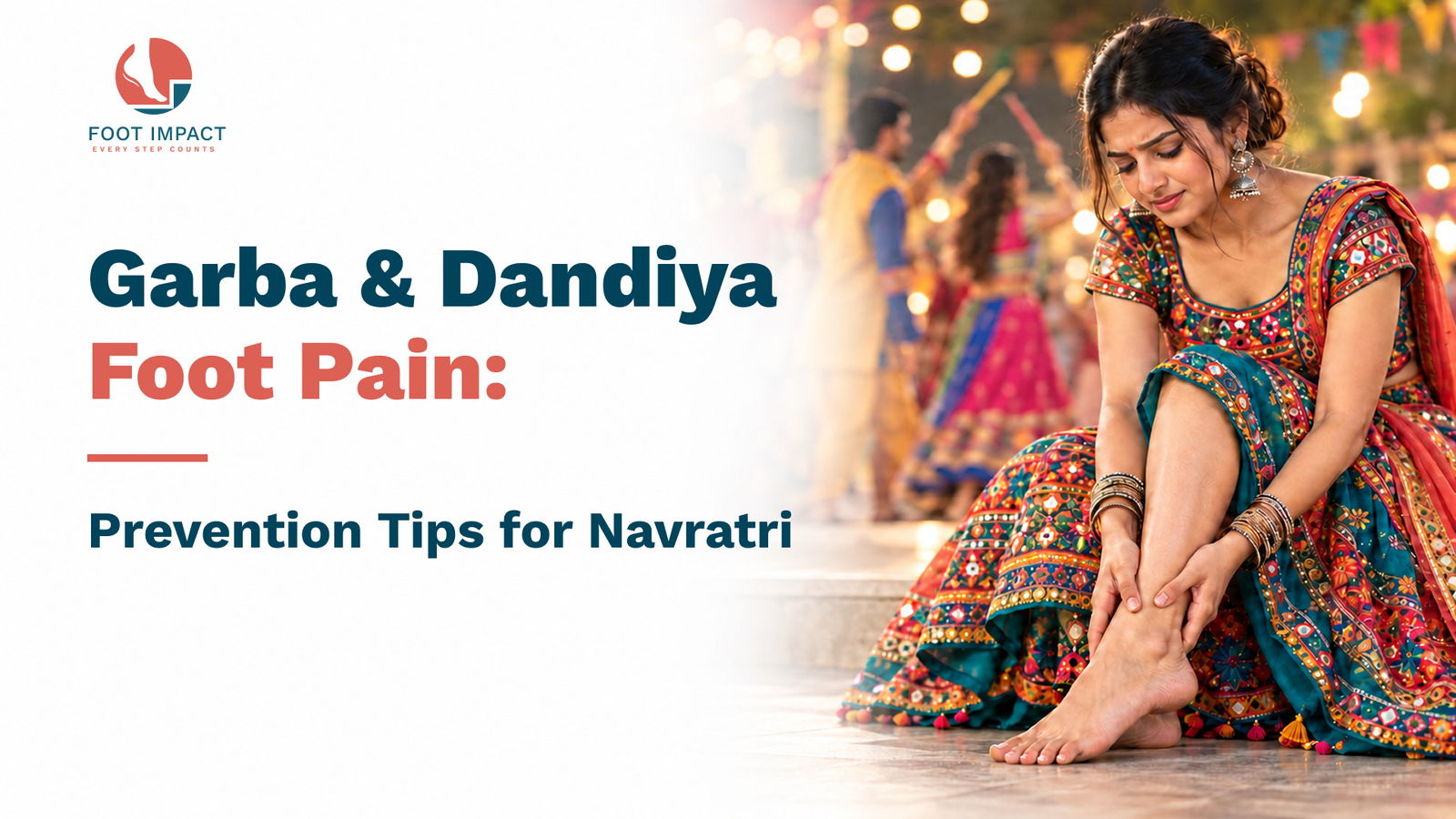
Garba & Dandiya Foot Pain: How to Prevent It (and Recover Fast)
By the fourth night of Navratri, the pattern is familiar. The first round of garba feels great. By the second hour your heels are aching, the balls of your feet are burning, and the walk back from the ground feels twice as long as the walk there. By the next morning, those first steps out of bed hurt.
If that sounds like you, you are in very good company. Garba and dandiya are lovely, but they put your feet through something they rarely face the rest of the year: hours of jumping, stamping, spinning and pivoting, often on hard ground, often night after night with no real recovery in between.
This guide explains why garba and dandiya are so tough on feet, what usually goes wrong, and what you can do before, during and after dancing to keep going without pain. It applies just as much to society garba nights, sangeet functions and garba classes as it does to the nine days of Navratri.
Why garba and dandiya are so hard on your feet
Most of us walk, sit and stand for the bulk of the day. Garba asks for something very different.
Repeated impact. The stamping and bouncing steps send a jolt through your heel or forefoot with every beat, hundreds of times an hour.
Constant pivoting. Twirling and quick turns twist the ankle and load the arch from the side, which is what feet are least built for.
Hard surfaces. Many Mumbai garba grounds are packed earth, concrete or thin mats laid over concrete. There is almost no give underfoot.
Weak footwear, or none. Flat mojris, thin chappals and bare feet give very little cushioning or support. Heels add their own balance problems.
Long sessions, no recovery. Dancing for three or four hours, then repeating it the next evening and the next, means tissues never get time to settle.
Late-night fatigue. Tired muscles protect the ankle less well, which is when most twists happen.
The most common garba and dandiya foot problems
Heel pain
A sharp or deep ache under the heel, especially with the first steps in the morning or after sitting, is the classic sign of plantar fasciitis. This is the thick band under your foot becoming irritated from repeated impact and stretching. You can read more in our guide to heel pain causes and prevention.
Pain in the ball of the foot
Many garba steps happen on the toes and forefoot. That can lead to a burning or bruised feeling under the balls of your feet, sometimes with a sensation of walking on a pebble. This is often metatarsalgia, which we explain in our post on metatarsalgia and ball-of-foot pain. If the pain sits specifically under the big toe, it may involve the small bones beneath that joint, covered in our article on sesamoiditis.
Ankle sprains
A rolled ankle during a fast turn, an uneven patch of ground, or a collision in a crowded circle is very common. If the ankle swells, bruises or will not take weight, it needs proper attention. Our guide to ankle pain causes and treatment explains what to look for. If you have already rolled an ankle, our ankle sprain recovery timeline explains what healing normally looks like.
Blisters and friction damage
Humid Mumbai evenings mean sweaty feet, and sweat plus rubbing equals blisters, particularly with new footwear or thin socks. Dancing barefoot on rough ground can also cause cracks, cuts and sore patches on the soles.
Calf, shin and arch soreness
Tight calves and aching shins usually show up the morning after. They are a sign your feet and legs are doing more than they are conditioned for, and a warning worth listening to.
Before you dance: how to get your feet ready
Build up gradually. If you have not been active in months, do not make night one a three-hour session. A few short sessions of light dancing or brisk walking in the week or two before gives your feet a chance to adapt.
Warm up properly. Five minutes is enough:
Calf stretch against a wall, 30 seconds each side.
Slow ankle circles, ten each direction.
Gentle toe raises and heel raises, ten of each.
A short, easy walk or light bounce to warm the muscles before the music picks up.
Choose footwear with some thought. Where footwear is allowed, pick something with a cushioned sole, a secure fit around the heel, and enough room for the toes. Avoid flat, paper-thin soles and avoid heels on uneven ground. Our shoe buying guide lists the features worth looking for.
If you dance barefoot, plan for it. Many people prefer to or are required to dance without footwear. In that case, check the ground first for stones and uneven patches, build up time slowly, and where the venue allows, consider grip-soled dance socks or adhesive forefoot cushioning to take the edge off.
Think about your feet's structure. If you have flat feet, high arches, a history of ankle sprains, or you already get heel pain, you are more likely to struggle. A cushioned insole can help, and in some cases a custom orthotic prescribed after an assessment is a better fit. You can read how we approach this on our flat feet treatment and heel pain treatment pages.
While you dance: small habits that protect your feet
Take breaks. Sit for five to ten minutes every 30 to 45 minutes, and put your feet up if you can.
Mix the intensity. Alternate high-energy rounds with slower ones instead of going full speed all night.
Watch the ground. Notice slippery patches, loose mats and uneven edges before you step on them.
Do not dance through sharp pain. Tenderness is normal. A sudden sharp pain, a twist, or a "pop" is not. Stop, sit down and look at the foot.
Stay hydrated. Tired, dehydrated muscles protect your joints less well.
Change socks if they are soaked. Damp skin blisters far more easily.
After you dance: recovery that actually helps
Cool down. A few minutes of slow walking and gentle calf and foot stretches before you go home.
Ice any hot or sore spot for 15 to 20 minutes, with a cloth between the ice and your skin.
Roll your arch. Rolling the sole of your foot gently over a cold water bottle can ease tightness under the heel and arch.
Elevate your feet for a while if they feel swollen or heavy.
Look after blisters. Leave an intact blister alone and cover it with a soft plaster. If it has burst, wash it gently, keep it clean and cover it. Do not peel off the skin.
Give sore feet a night off. If you wake with real heel or forefoot pain, one rest evening now is better than a week of limping later.
When to see a podiatrist
Some soreness after a long night of dancing is expected. See a podiatrist if you notice any of these:
You cannot put weight on the foot, or an ankle twist is still swollen or bruised after two days
Heel or forefoot pain that is getting worse each day, or that lasts more than a week after you stop dancing
Pain that wakes you at night or is present at rest
Numbness, tingling or a burning feeling that does not settle
A blister that is red, hot, leaking pus or surrounded by spreading redness
You have diabetes or reduced sensation in your feet. In this case, even a small blister or cut should be checked early rather than waited out.
Treating foot pain early usually means a shorter, simpler recovery, and it can be the difference between sitting out the season and dancing through it.
How Foot Impact can help
At Foot Impact, our podiatrists look for the cause of foot pain rather than just the sore spot. That means examining how you stand and walk, checking your footwear, and building a non-surgical plan that may include targeted exercises, taping, cushioned or custom insoles, and advice on returning to dancing safely. If garba or dandiya leaves you with heel pain, forefoot pain or an ankle that has not settled (see our ankle pain treatment page), you can book a consultation with us in Mumbai.
Your feet carry you through every round. A little preparation and care means you can enjoy the music instead of counting the minutes until you can sit down.
This article is for general information and is not a substitute for a medical assessment. If you have significant pain, swelling or an injury, please see a qualified healthcare professional.