Foot Care for Seniors: Common Problems in Elderly Feet
Feet carry us for a lifetime, and by the time we reach our sixties and seventies, they show it. Yet foot pain is often the last thing older adults mention to a doctor — it gets written off as "just old age." That mindset is exactly what leads to bigger problems: falls, infections, and a slow loss of independence.If you're an older adult noticing new aches underfoot, or an adult child who's spotted your parent shuffling more carefully than they used to, this guide walks through what's actually happening to ageing feet, the problems to watch for, and when it's time to bring in a podiatrist.
How Feet Change With Age
Feet age the way the rest of the body does — gradually, and in ways that aren't always obvious until they start causing discomfort.
The fat pads thin out. The cushioning on the soles and heels, which absorbs shock with every step, naturally thins with age. Without it, walking on hard floors or tiled surfaces (common in Mumbai homes) can start to feel uncomfortable, even painful.
Circulation slows down. Blood flow to the feet — the part of the body furthest from the heart — tends to reduce with age, and even more so if there's underlying heart disease, diabetes, or high blood pressure. Poor circulation means slower healing, colder feet, and a higher risk of minor cuts turning into serious wounds.
Joints get stiffer. Cartilage wears down over decades of use, and conditions like arthritis become more common in the small joints of the feet and toes. This can change the way someone walks, which then affects balance and puts extra strain on other joints.
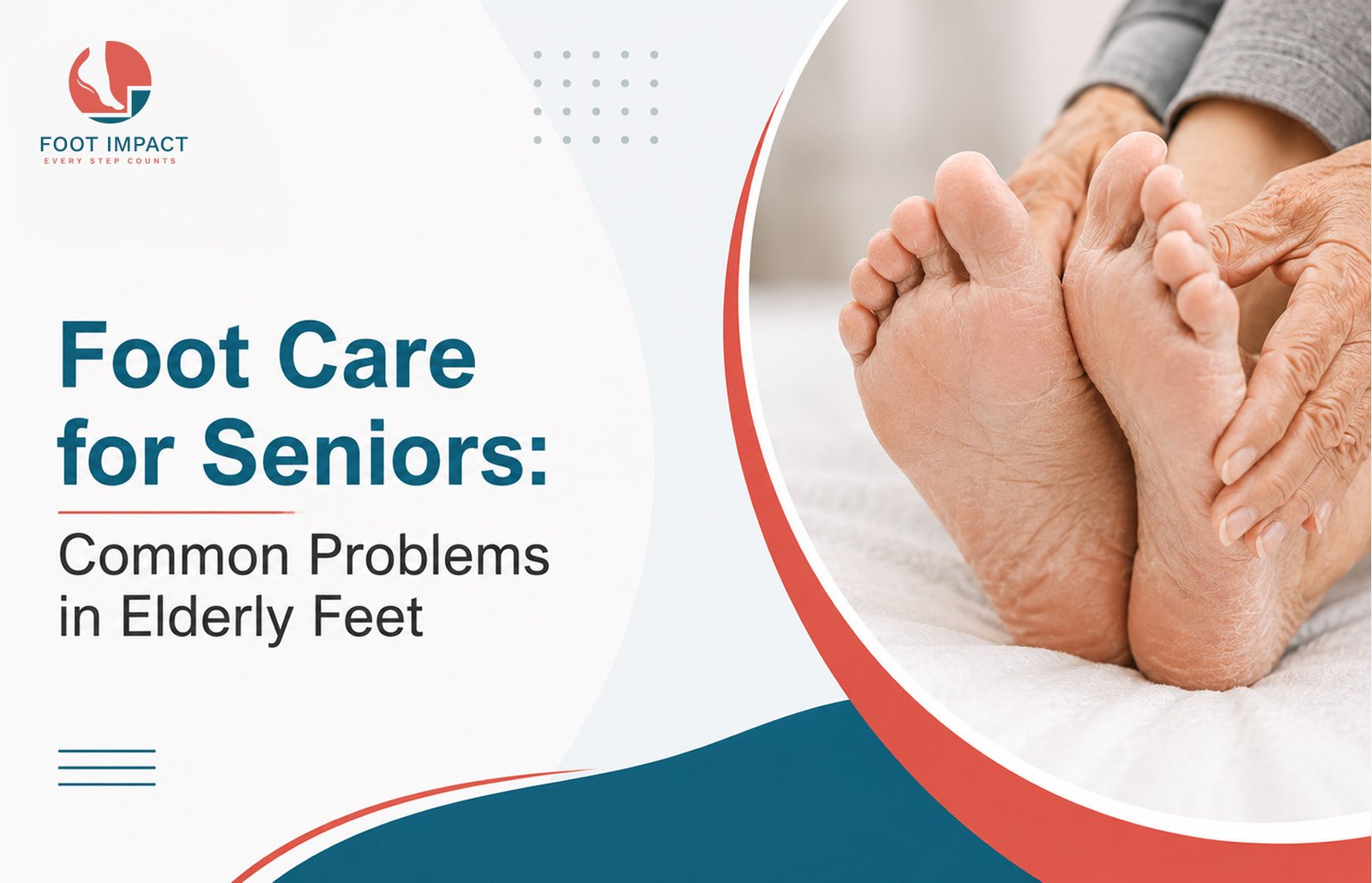
Skin and nails change texture. Skin becomes thinner and drier, and toenails often grow thicker and more brittle, partly due to slower circulation and years of pressure from footwear.
None of this happens overnight, which is exactly why it's easy to miss — until a problem is advanced enough to cause real pain or mobility issues.
The Most Common Foot Problems in Seniors
A few conditions show up again and again in older patients:
Thickened, discoloured toenails. Often mistaken for a fungal infection (and sometimes it is), thickened nails can also result from years of pressure, poor circulation, or minor unnoticed injuries. Left untreated, they can become painful or make trimming difficult and unsafe to do at home.
Dry, cracked skin. Reduced oil gland activity means heels and soles crack more easily, which can be more than a cosmetic issue — deep cracks are an entry point for infection.
Calluses and corns. Years of pressure and friction, combined with thinner fat pads, make calluses and corns more common and more likely to cause pain when walking.
Bunions. A lifetime of footwear choices, combined with joint changes, often causes bunions to progress in older age, making certain shoes uncomfortable or unwearable.
Hammertoes and toe deformities. Muscle imbalances and joint stiffness can cause toes to curl or overlap, leading to friction points and corns.
Individually, these might sound minor. But in an older adult, even a small, unaddressed issue can snowball — a corn changes the way someone walks, the altered gait strains a hip or knee, and mobility declines further.
Why Elderly Diabetic Feet Need Extra Vigilance
For seniors living with diabetes, foot care isn't optional — it's essential. Diabetes affects both circulation and nerve sensation in the feet, a combination that can be dangerous. Reduced sensation means a blister, cut, or pressure sore can go unnoticed for days. Reduced circulation means that same wound heals slowly, if at all.
This is why diabetic foot checks are recommended more frequently for older adults than for younger diabetics, and why any foot injury in a senior with diabetes — however small it looks — deserves prompt attention rather than a "wait and see" approach.
Balance, Gait, and Fall Risk
Foot health and fall risk are more connected than most people realise. Numbness, pain, joint stiffness, or a bunion that changes someone's stride can all quietly affect balance. Add in worn-out or ill-fitting shoes, and the risk of a trip or fall rises considerably.
For older adults, falls are not a minor setback — a fracture from a fall can mean months of reduced mobility and independence. Addressing foot pain and gait changes early is one of the more overlooked ways to reduce fall risk at home.
Footwear Guidance for Older Adults
The right footwear can make a meaningful difference to comfort, balance, and safety. A few basics to keep in mind:
Choose shoes with a firm, supportive sole rather than very soft or very flat ones.
Look for a wide, deep toe box that doesn't crowd bunions, hammertoes, or thickened nails.
Avoid backless slippers or chappals for regular indoor walking — they offer little support and increase fall risk.
Cushioned insoles can help compensate for thinning fat pads.
Shoes should be refitted periodically, since foot shape and size can change with age.
Comfortable, well-fitted footwear is one of the simplest and most effective preventive steps a family can take.
How Often Should Seniors Get a Podiatry Check-Up?
For most older adults, an annual foot check is a reasonable baseline — similar to a routine dental or eye check-up. For seniors with diabetes, poor circulation, or a history of foot ulcers, more frequent visits (every three to six months) are usually advised.
Regular check-ups allow small issues — a thickening nail, an early corn, a patch of dry skin — to be caught and managed before they become painful or infected.
When Family Members Should Step In
Older adults don't always mention foot pain, sometimes because they assume it's a normal part of ageing, and sometimes because reduced sensation from poor circulation or diabetes means they simply don't feel it as strongly. This is where family members play an important role.
Consider bringing a parent in for a podiatry visit if you notice:
Changes in the way they walk, or new hesitance on stairs
Visible nail discolouration, thickening, or ingrowth
Cracked heels, sores, or wounds that aren't healing
Complaints of numbness, tingling, or cold feet
Swelling, especially if it's new or one-sided
Reluctance to wear regular shoes due to discomfort
Catching these early, rather than waiting for a crisis, is often what keeps an older parent mobile, independent, and pain-free for longer.