A Step toward Healing: Managing a Non Healing Diabetic Ulcer with Custom Orthotics

Situation
A
gentleman from South Africa came to FootImpact with a long history of
diabetes (Type 2 for 30 years). He had already faced serious complications:
- Cellulitis in the right leg twice.
- Right great toe amputation in 2002.
By March
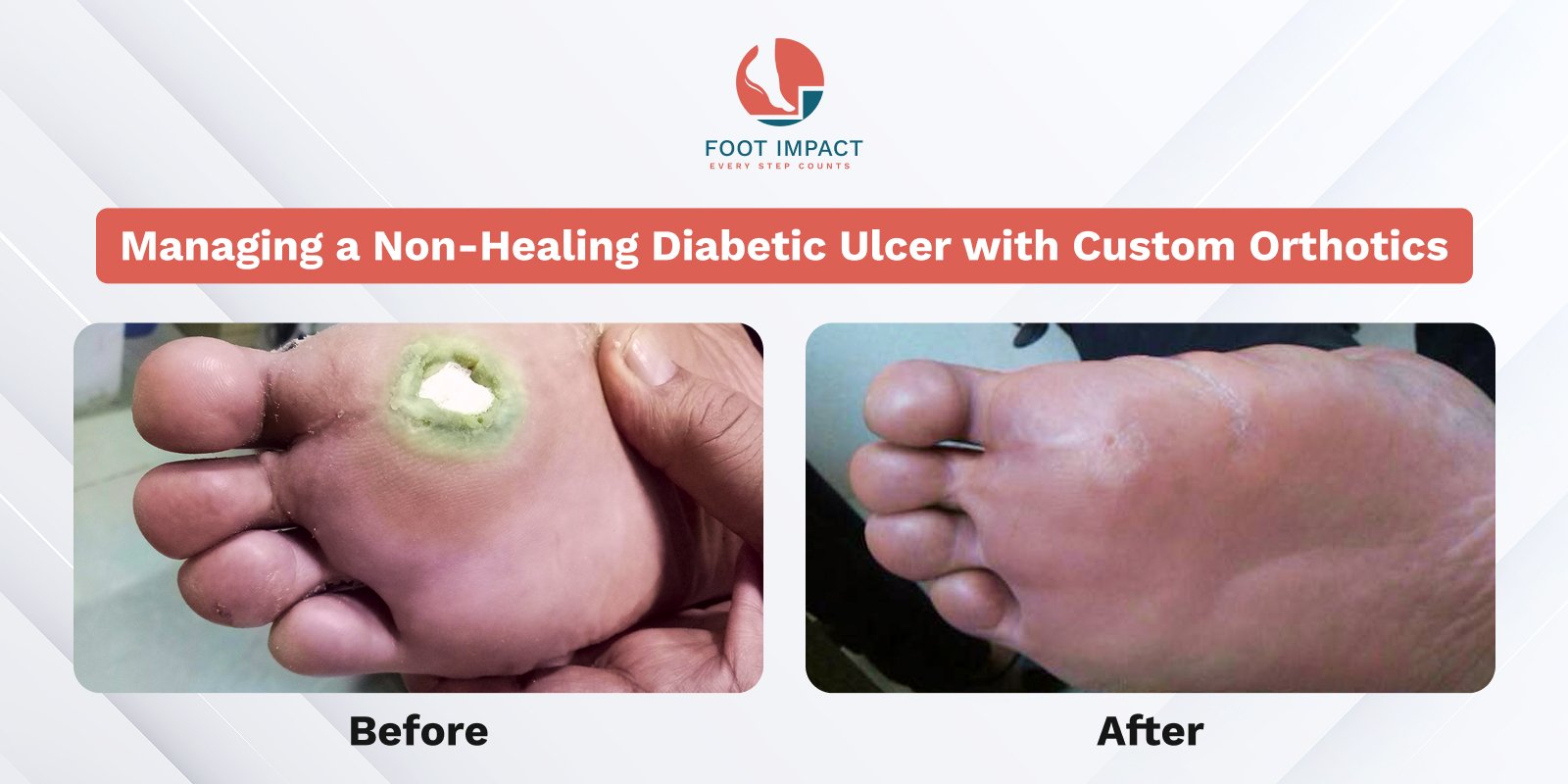
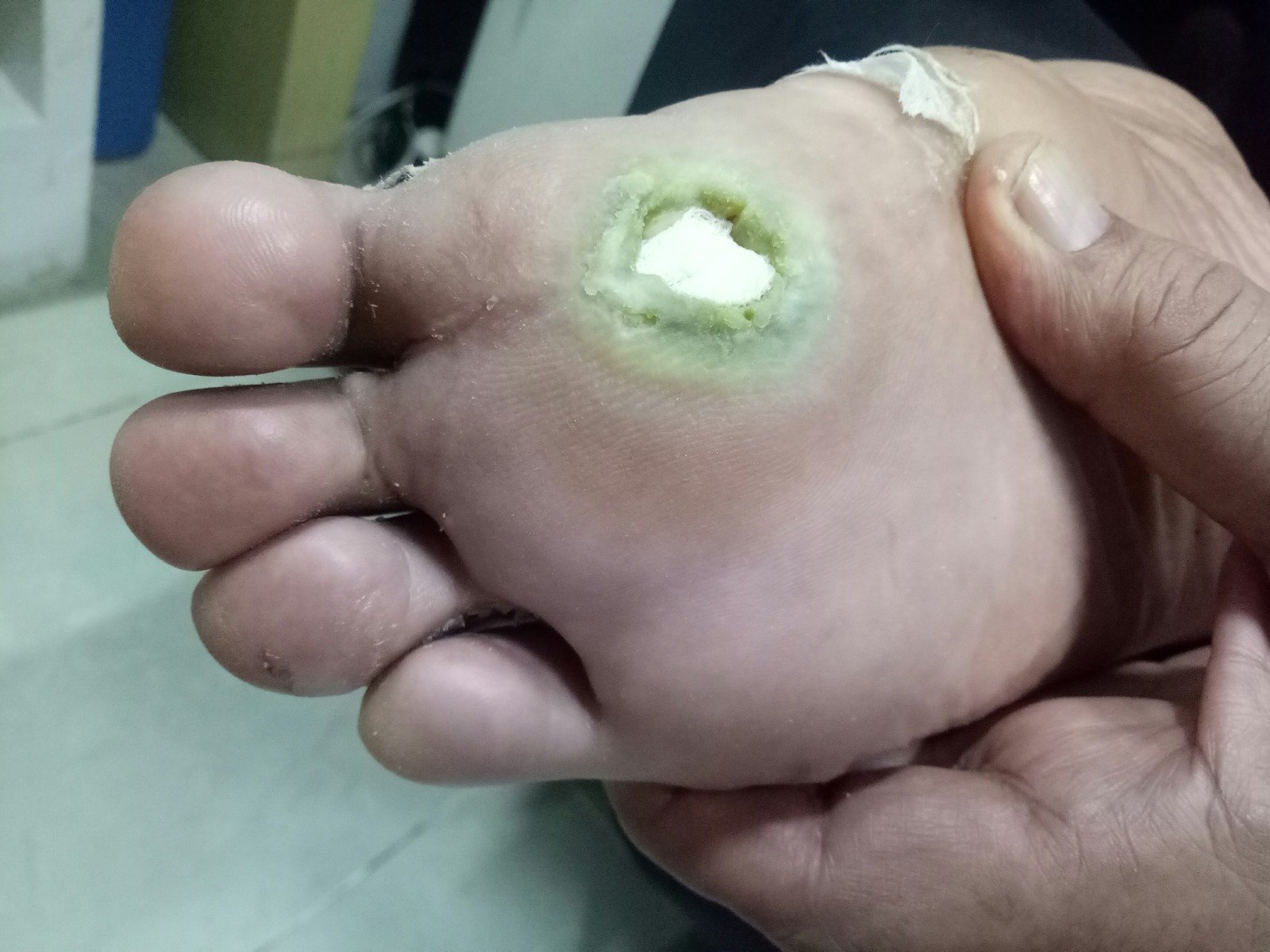
2014, he was struggling with a non‑healing ulcer under the right forefoot,
between the 1st and 2nd metatarsal heads. Being diabetic, the risk of infection
and further complications was high.
The
biggest challenge? He was not based in Mumbai — regular follow‑up, which is
critical for diabetic ulcers, was difficult.

Complication
Our team observed:
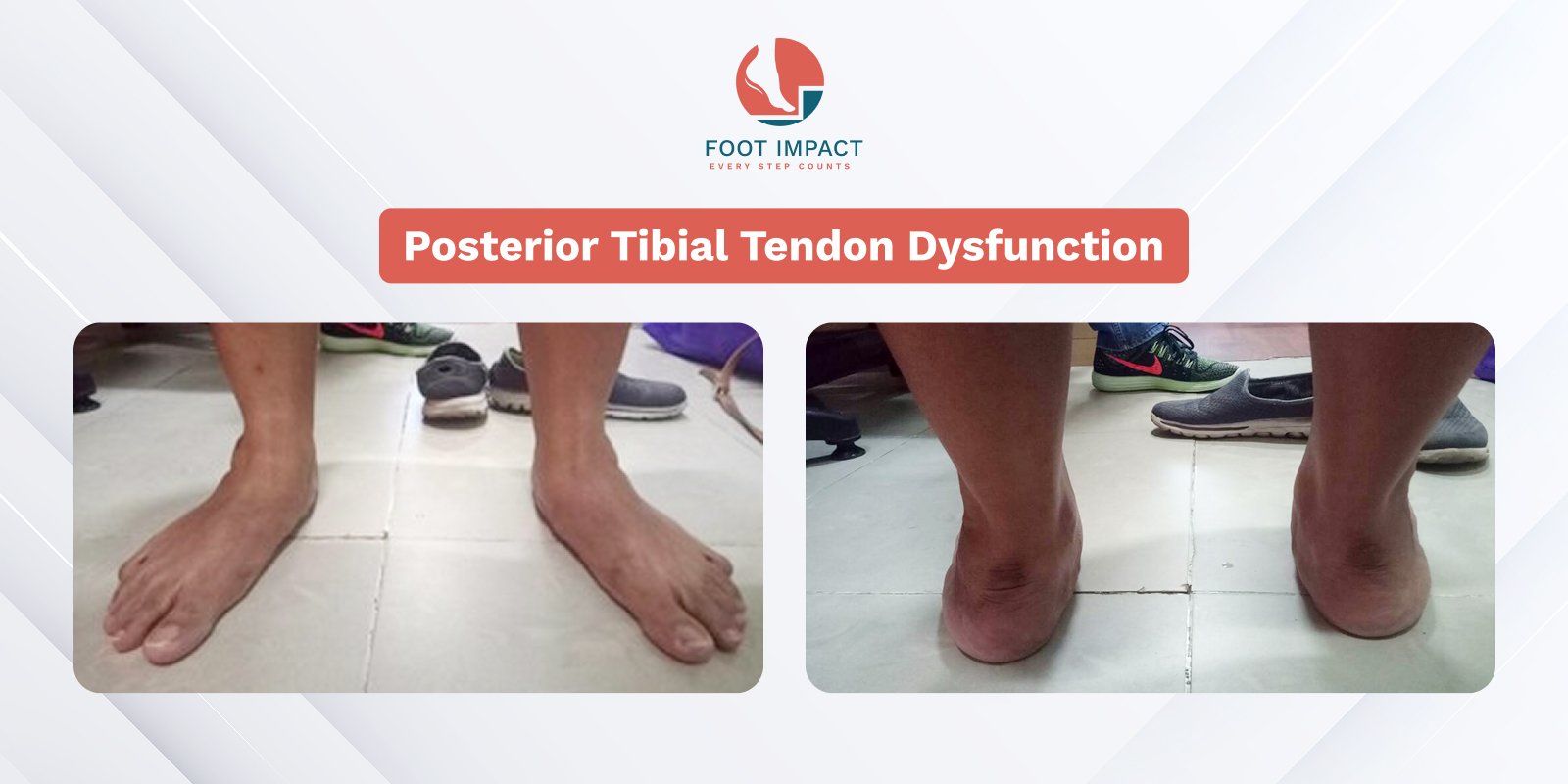
Right foot: Flat medial arch, overpronation, longer loading time, limping.
Left foot: Well-defined arch, underpronation (supination), shorter loading time.
Foot size mismatch: Right foot size 8½ W, Left foot size 11 W.
This uneven alignment and gait meant each foot needed a different correction plan. The root cause of the ulcer was excessive forefoot pressure from overpronation on the right side.

Solution
Treatment Plan
Split pair of stable shoes to match the different foot sizes.
Customized orthotics:
Right foot — controlled overpronation and offloaded forefoot pressure.
Left foot — corrected underpronation for balanced gait.
Since the patient was traveling back the next day, we explained the situation clearly and let him try available orthotics to understand the correction.

Impact
Implementation
The actual correction began on 9 December 2014, once he returned after cellulitis treatment.
He immediately felt better, though the orthotic offloading was a new experience.
With diligent use, his walking pattern improved
Outcome
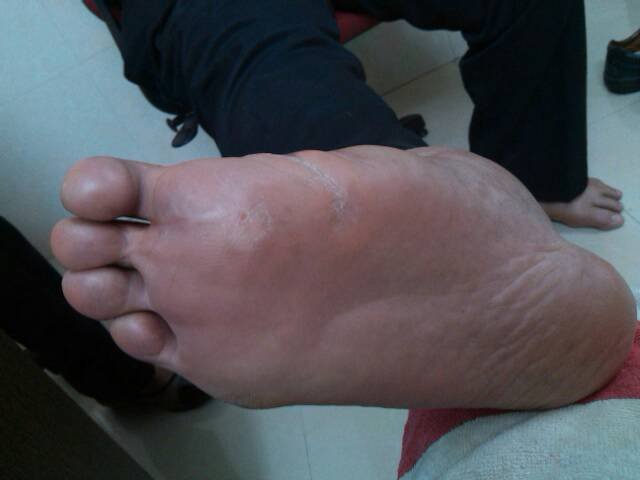
Nearly a year later, he came for follow-up. The result was remarkable:
The ulcer had completely healed — not even a trace remained.
He was thrilled and understood the importance of continuing orthotics and proper footwear as a lifestyle change, not a temporary fix.
Key Learning
The ulcer was just a symptom. The real problem was foot misalignment and uneven gait. By correcting biomechanics and redistributing pressure, healing became possible. Managing only the symptom (like removing dead tissue or relying on medicines) is a shortcut that risks recurrence. Addressing the root cause is the only way to achieve lasting results.

Case Study